This Military Service Page was created/owned by
A3C Mike Bell
to remember
Cury, Enver Charles, Capt.
If you knew or served with this Airman and have additional information or photos to support this Page, please leave a message for the Page Administrator(s) HERE.
Contact Info
Home Town Allentown, Pennsylvania
Last Address Boca Raton, Florida
Date of Passing Oct 11, 1996
Wall/Plot Coordinates Not Specified
Official Badges
Unofficial Badges
Additional Information
Last Known Activity:
"... truly one-of-a-kind grouping, named to Captain Enver "Ed" C. Cury. As a member of the 615th Bomb Squadron 401st Bomb Group, 8th Air Force, Cury's B-17 was shot down on June 19, 1944 on a raid to Merignac, France (his 30th and final mission). After being shot down, Cury managed to elude the Germans before being captured. He managed to escape on the way to a prison camp before being caught by the French Resistance, who accused him of being a Gestapo agent. For several months afterwards, he fought with the French resistance, and was, according to his own account, the first American to witness the devastation of Oradour-Sur-Glane after the German massacre there. He finally managed to seize a decrepit German aircraft and fly it across the English Channel back to England. All of this and more he recounted in his 1988 book Time Out For War.
I purchased this group directly from Cury's grandson two years ago. I had had his book on my shelf, and did not want to pass up the opportunity to own such an important group. I have not been disappointed. This has really been the keystone of my collection. Included with the group is Cury's tunic - which he is wearing in the picture on the cover of the book - several reunion ballcaps, bricks from the 401st Control Tower, pieces of Cury's B-17, and, perhaps most impressive, a charcoal sketch and watercolor of Cury's B-17 by a Belgian artist. Cury had commissioned these works - the final of which is still owned by Cury's grandson - to represent the image he had as he bailed out of the plane. They are truly splendid pieces of work, worthy of being framed. Incidentally, the artist who painted these works, Pierre Bergem, was a major with the resistance in Luxembourg during the war and later became a notable illustrator. All in all, this is one of the most marvelous groupings on the market today. I will, with every set of pictures, attempt to describe the items in full.
First, however, it should be explained that many have doubts about Cury's story. This is one review of Cury's book (http://www.amazon.com/Time-Out-War-C-Cury/product-reviews/0425126579)
On his last bombing mission, B-17 pilot Captain Ed Cury is shot down over Nazi occupied France. Parachuting to earth and bleeding from an injury, he evades German patrols looking for him. He is finally captured but not before killing two Germans with his pistol. Withstanding increasingly torturous Gestapo interrogations, he reveals nothing and is sent to a POW camp in Germany. En route, his truck convoy is strafed by allied planes, and Cury seizes his opportunity to escape from the burning wreckage. Traveling at night, and hiding by day, Cury avoids patrols, dogs, and German aircraft looking for him. He commandeers a railroad pump-cart, kills more Germans, swims to the middle of the Rhine River and grabs hold of a rope trailing a river barge. Hitching a ride on the barge, he scampers aboard only to steal food. Ever cautious of being betrayed, Cury eventually hooks up with the French Resistance, and accompanies them on several clandestine sabotage missions. Ever the Casanova, Cury seduces a few female compatriots, (described in graphic detail) including a beautiful wealthy Countess, who was hiding him at her mountain top villa. To overcome the increasing difficulty of reaching the American lines, Cury decides to make-shift repair a damaged German plane and fly back himself. Hastily brushing "USA Don't Shoot" on the fuselage and wings in white paint, Cury, not sure the plane will even fly, and no radio, eventually lands safely, after a few close calls with American fighter planes.
The $60,000 question: is Cury's story true? A handsome crooner before the war, Cury sang with such entertainers as Patti Page. He kept ties with personalities in the entertainment business after the war as well. A photograph on the dedication page shows an older Cury laughing it up on the Merv Griffin Show with friends Jack Klugman, and a young Jay Leno. Cury writes that Klugman was instrumental in convincing him to write his memoirs. The book reads like an epic World War II movie of the 1960s such as The Great Escape or Von Ryan's Express. Given Cury's show-biz connections, his book could easily have been converted into a movie script, a lucrative venture for its author. A photo section shows several of Cury's citations and awards, including a commendation for fighting with the French Resistance. A photo of Cury's hand-painted escape plane, however, looks like it was taken of a plastic model kit.
I am reminded of an officer who was close to my father during the war. He related that after the war, he freely told of his harrowing experiences in combat. When those who had never experienced combat accused him of lying, he closed up and remained silent for decades. Was this the reason most World War II veterans never spoke of their experiences? Was Cury's book over embellished and dramatized in hopes of perhaps being made into a movie? Or, is his stranger than fiction escapade difficult for many of us who have never experiences war to grasp? Whatever the answer, this book was a captivating read, and for anyone interested in World War II, worthy of hunting down a copy.
While I have my doubts about the veracity of some of the details of Cury's experiences - and granted, they were written down decades later, and surely that has something to do with it - there is no doubt that he was a member of the 401st Bomb Group, was shot down, evaded capture, and returned to England. He was a member of the Winged Boot club and the Caterpillar Club. The book is an amazing read, even if some parts of it are hard to swallow..."
Other Comments:
This Remembrance is based upon and credited to research done by USMF member "Beau Wright" (user name) who collected a grouping named to this officer which may be seen at this link:
Nom/Matricule : Enver/Edward "Ed" Charles CURY
Naissance/Décès : 1921 Pensylvannie /
Adresse : Allentown, Pennsylvania, USA
Unité : USAAF 401st Bomb Group/ 615th Bomb Squadron
Grade : Lt
Fonction : bombardier
Zone d'atterrissage :
Avion
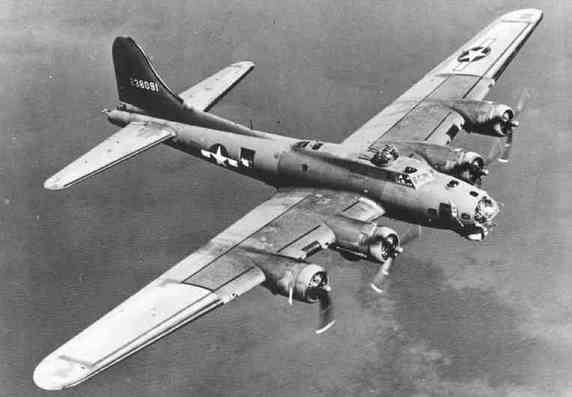
Type : Boeing B-17G-VE Flying Fortress
N° série : 44-40002
Immatriculation/Nom : IY-D / "Breezing Home"
Abattu le : perdu suite à des problèmes mécaniques le 19 juin 1944 lors de la mission sur Bordeaux/Mérignac
Localisation : écrasé à Puyau, dans la commune de Saint-Gaux, à 6km au sud-est de Lesparre-Médoc, Gironde, France
Action de Comète
Réception :
Interrogatoire :
Hébergeurs :
Guides nationaux :
Guide international :
Durée : 3 semaines
Camps : Anglet, chez les De Greef
Informations complémentaires :
Le Missing Air Crew Report relatif à la perte de cet appareil : MACR 6001. E&E 1845.
C’est la dernière mission de combat qui était prévue pour le Lt Cury. Dans son livre "Time Out for War - An American Airman's True Firsthand Account of Survival in Nazi-Occupied Territory" publié en 1988 en Floride par Rainbow Books, il raconte que, saignant suite à des blessures, il atterrit en parachute et s’enfuit à l’approche de soldats Allemands lancés à la recherche des membres de l’équipage. Finalement capturé (après avoir abattu deux Allemands avec son pistolet) il est interrogé, torturé, mais ne révèle rien à ses tortionnaires, qui l’envoient par camion vers l’Allemagne.
En cours de route, le convoi est attaqué par des chasseurs alliés et Cury en profite pour s’échapper. Voyageant de nuit, se cachant le jour, il évite les patrouilles allemandes lancées à sa recherche. Il ajoute qu’il fait un parcours en draisine sur une voie de chemin de fer en Allemagne, qu’il abat d’autres soldats allemands, qu’il nage en plein milieu du Rhin, attrapant une corde à la traîne derrière une péniche, qu’à bord de celle-ci, il chipe de la nourriture, qu’il finit par entrer en contact avec la résistance en France qu’il déclare avoir accompagné dans des missions de sabotage. Ces dernières actions lui vaudront des décorations attestées, le reste de sa rocambolesque histoire pouvant être sujet à caution quant à sa véracité.
Du même équipage : Lemke (fiche D140), Mackey (fiche D151), Tracey (fiche D222), Schaffer (fiche D196), Armstrong (fiche D007), Acker (fiche D001), Courtad (fiche D045), Shantz (fiche D263) et Trimble (fiche D224).
Cury a écrit "Time Out for War - An American Airman's True Firsthand Account of Survival in Nazi-Occupied Territory" publié par Rainbow Books, Floride, en 1988.