On the afternoon of Dec. 4, 2006, a Humvee rolled through the narrow streets of Adhamiya, a tense neighborhood in northeast Baghdad. It was one of hundreds of patrols that had blurred together for the men of 1st Platoon, C Company, 1st Battalion, 26th Infantry Regiment. The mission that day was the same as it had been for months: show presence, deter sectarian violence, and make it just a little harder for insurgents to own the streets.
In the turret, behind the big Ma Deuce machine gun, stood a 19-year-old private first class from Pennsylvania: Ross Andrew McGinnis. He was tall and lanky, with a kid's face that didn't look old enough for combat gear. By the time he reached Baghdad, everyone knew his backstory.
When he was in Kindergarten, his teacher told the class to draw what they wanted to be when they grew up. McGinnis drew a soldier. He meant it. He joined the Army on his 17th birthday through the Delayed Entry Program, went to basic at Fort Benning, and eventually landed in C Company, 1-26 Infantry, part of the 1st Infantry Division attached to 2nd Brigade, 2nd Infantry Division.
By late 2006, his unit was deep into a brutal tour in eastern Baghdad. The men lived out of a former palace-turned-outpost, running near-constant patrols in an area where ambushes, IEDs, and sniper fire were part of daily life. Adhamiya was the kind of place where every alley could hide a rifle and every rooftop could conceal an insurgent.
 That day, McGinnis was doing what he did most often: riding as the gunner in a Humvee, standing in the turret, harnessed in, scanning the rooftops for threats. Inside the vehicle with him were four other soldiers: the driver, Commander, and two more in the back. It was a standard combat patrol. Perhaps routine, but never really safe.
At some point on that patrol, an insurgent watched the Humvee long enough to see his chance.
From a rooftop or a window (it's described differently in various accounts) an insurgent hurled a fragmentation grenade toward the vehicle. The grenade arced toward the turret, slipped past the shield, and dropped straight through the open gunner's hatch, landing inside the cramped, armored shell of the Humvee.
For a split second, McGinnis was the only one who knew what had happened. He heard it. He saw it. The others inside did not. He reacted instantly.
He shouted one word: "Grenade!" which bought the rest of the crew a heartbeat of awareness. According to his Medal of Honor citation, his shout allowed the four men inside to react—to duck, turn, brace, do anything they could to survive what was about to happen.
 In that same tiny slice of time, McGinnis had a way out. As the gunner, he was standing in the turret, his upper body exposed. The hatch above him was open to the sky. The most natural, instinctive reaction would have been to launch himself out of the vehicle, drop down the side, and hope the blast stayed contained inside. He would have been fully justified in doing exactly that. No one would have faulted him; no one would even have had time to see the choice he made.
Rather than jumping away, McGinnis dropped down into the vehicle. The grenade was at his feet, on the floor of the Humvee, in the middle of the four men who couldn't escape. He could have tried to pick it up and throw it out, but there was no time and no room. The inside of a Humvee is a steel closet; any motion is slow, awkward, snagged by gear and webbing. He did the one thing that guaranteed his friends a chance to live.
He lowered himself onto the grenade, pressing it to the floor with his body, pinning it there. He curled over it, turning his own torso into a shield. When it detonated, the blast and shrapnel tore through him instead of through the others.
The explosion was devastating at point-blank range. McGinnis was mortally wounded. But the four men inside the Humvee survived. They were wounded, but they lived. The bulk of the grenade's force and lethal fragments were trapped between his body and the vehicle's floor.
 Later, the Army and the White House would use careful phrases like "conspicuous gallantry and intrepidity above and beyond the call of duty." They would describe how he "made the courageous decision to protect his crew" and "absorbed most of the explosion." But the core of it is brutally simple: a teenager from Pennsylvania saw a grenade inside his truck and chose, in less than a second, to die so four other people wouldn't.
In the aftermath, his platoon had to do the hardest thing soldiers do: keep operating. But the story of what happened in that Humvee on Dec. 4, 2006, traveled outward—first within the platoon, then the battalion, then the brigade, and finally across the Army. The four soldiers whose lives he saved carried the weight of that day in a way no citation can fully convey.
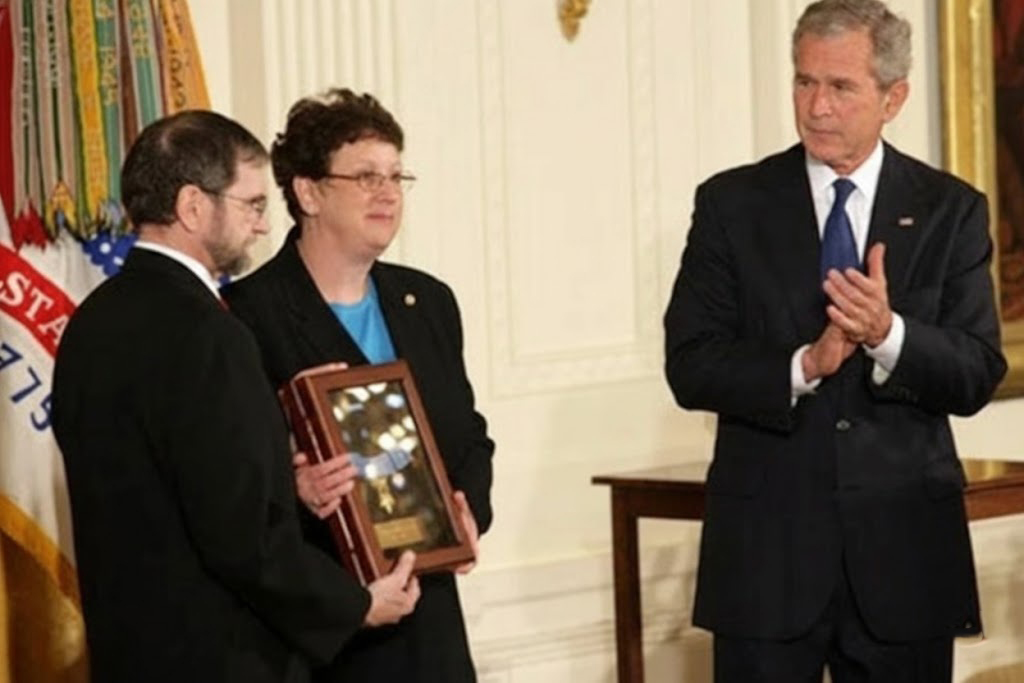
On June 2, 2008, his parents stood in the East Room of the White House to receive his Medal of Honor from President George W. Bush. By then, McGinnis had been posthumously promoted to specialist, but the citation read out loud still began with the name everyone in his unit knew: Pfc. Ross A. McGinnis.
The president spoke about a young man who had wanted to be a soldier since kindergarten, about a 19-year-old gunner in a dusty Baghdad neighborhood, about a grenade that fell through a hatch. "For his heroism that day," Bush said, "he now receives the Medal of Honor."
 In a war full of complex politics and messy narratives, McGinnis' story is almost stark in its clarity. There's no ambiguity about what happened in the seconds after that grenade came through the hatch. The Army's own summary is blunt: he could have escaped, but he didn't. He made one decision, and four men lived.
That's the entire story and somehow still not enough—because what you're really left with is the unanswerable question at the center of every act of valor like this: What kind of person does that?
Ross Andrew McGinnis never got to come home and figure out what life after the Army looked like. What he did get was about as pure an example of self-sacrifice as exists in modern war: a single December afternoon in a Baghdad street, a cramped Humvee, a grenade, and a choice that turned a 19-year-old private into a name etched forever in Army lore and the hearts of four soldiers—Ian Newland, Lyle Buehler, Cedric Thomas, and Sean Lawson—who are alive because of McGinnis' sacrifice.
 In December 1941, as Japan ripped across the Pacific, most American outposts collapsed in days. Guam fell between Dec. 8 and Dec. 10 to a larger Japanese landing force after only brief resistance by a small, lightly armed garrison of sailors and Marines. Wake Island was supposed to be another speed bump. Instead, a few hundred Marines, sailors, and civilian contractors turned it into a two-week fight that delivered the first American tactical victory of the Pacific War and a badly needed morale boost at home.
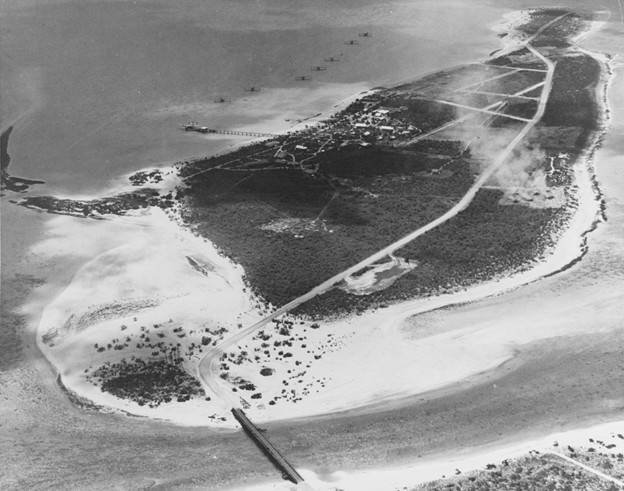
Wake was an odd prize: a wishbone-shaped coral atoll about 2,000 miles west of Oahu, made up of three low islets named Wake, Wilkes, and Peale. By early December 1941, the U.S. had turned it into an unfinished outpost with roads, a triangular airstrip, and basic naval air facilities built by more than 1,100 civilian contractors. The garrison itself was tiny but well armed. On Dec. 4, 1941, the island held 449 Marines, 69 sailors, and a six-man Army radio detachment— only 524 officers and men in all. Most belonged to the Wake Island detachment of the 1st Defense Battalion, backed by Marine Fighting Squadron 211 with 12 F4F-3 Wildcat fighters.
The Marines were so few in number that they could not fully man the island's defenses, but what Wake lacked in manpower, it made up for in hardware. The Marines had 12 3-inch antiaircraft guns, 6 5-inch seacoast guns, six searchlights, 18 .50-caliber antiaircraft machine guns, and 30 .30-caliber guns, dug into coral gun pits they'd carved mostly with picks and shovels. That gave them a real ability to hurt ships and aircraft, which is something Guam never had. Official U.S. accounts of the Guam fight explicitly describe its 1941 defenders as a "small, lightly armed garrison" that was "quickly overrun" between Dec. 8 and 10.
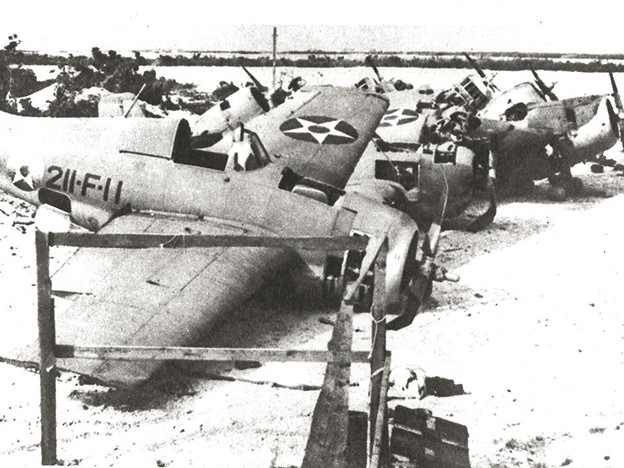 Wake's war started hours after Pearl Harbor. On the morning of Dec. 8 (Wake being west of the International Date Line), the island's Army radio trailer received an emergency message from Hawaii: Oahu was under attack. Just before noon, 27 Japanese medium bombers from the Marshalls burst out of the clouds over Wake at about 2,000 feet. The garrison hesitated briefly, thinking they might be American B-17s, and paid dearly for it. The bombers destroyed seven of VMF-211's Wildcats on the ground and killed or wounded about half the squadron's personnel in minutes.
Rather than sit still and wait for the next raid, the Marines adjusted. Anti-aircraft crews moved their 3-inch guns to new positions, improved camouflage, and used wooden dummies at the old sites. Later raids would waste bombs on the decoys while the real guns fired from fresh locations. Civilian contractors volunteered by the hundreds to reinforce defenses, joining gun crews, belting ammunition, repairing aircraft, and hauling sandbags and hot food to the outer positions.
The first decisive test came on Dec. 11. Confident that earlier bombing had neutralized Wake, Rear Adm. Sadamichi Kajioka approached at dawn with a "Wake Invasion Force" built around three light cruisers, six destroyers, two patrol boats, two transports, and submarines carrying about 450 Special Naval Landing Force troops.
 Wake's defenders didn't panic and open fire the moment the ships appeared, but they did fume as the Japanese ships approached. Orders from Maj. James Devereux, commanding the 1st Defense Battalion detachment, told them to hold their fire until the cruisers drew close. Devereux knew the ship out ranged his six 5-inchers. His only hope was to hold fire and draw the Japanese into point-blank range. As Kajioka's flagship, the light cruiser Yubari, ran into about 8,000 yards and began its firing run, the rest of the flotilla followed, pounding the island and setting fuel tanks ablaze. The Marines, under strict orders, kept their guns silent.
Only when Yubari turned into a third firing run at roughly 4,500 yards did Devereux finally give the order to open fire. The 5-inch battery on Wilkes Island, "playing possum" until then, found the range on the destroyer Hayate, scored direct hits, and blew the ship apart in view of the defenders. Other batteries hit additional ships, and Kajioka turned away, believing he was escaping the trap. Instead, he ran headlong into the air side of Wake's defense.
VMF-211 had only four serviceable Wildcats left, but they flew ten attack sorties against the retreating force, strafing decks and dropping 100-pound bombs. A lucky hit on the stern of the destroyer Kisaragi detonated her depth charges and sent her to the bottom as well. Later that day, a Wildcat on patrol sank a Japanese submarine that surfaced too close to the atoll.
 At the cost of two fighters damaged and five Marines lightly wounded, Wake's garrison had repulsed the landing, sunk two destroyers, and damaged other ships. Historians of the battle and Marine Corps official narratives consistently describe the Dec. 11 fight as America's first tactical victory of the Pacific War and the first unsuccessful amphibious assault mounted by either side in that theater.
The contrast with Guam could not have been sharper. Where Guam's lightly armed garrison was brushed aside in three days, Wake's coastal artillery and handful of fighters inflicted disproportionate losses and forced a Japanese admiral to retreat.
The victory reverberated far beyond the atoll. Reports of the "little island that fought back" reached the United States just as Americans were processing Pearl Harbor, the Philippines, and the loss of Guam and Hong Kong. President Franklin D. Roosevelt himself held up Wake as evidence that U.S. forces could and would hit back, and the battle quickly became a potent rallying point for a shaken public.
Japan was determined not to be embarrassed a second time. In the days after Dec. 11, the Imperial Navy reinforced Kajioka with four heavy cruisers, additional destroyers, a seaplane tender, and two carriers from the Pearl Harbor strike force, Soryu and Hiryu, along with roughly 1,600 more Special Naval Landing Force troops. Carrier aircraft smashed Wake on Dec. 21 and 22, shooting down the last two Wildcats and further degrading the gun defenses.
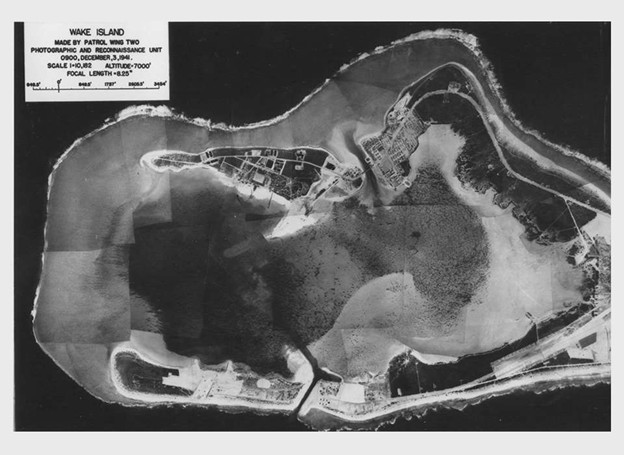 On Dec. 23, the Japanese returned, this time avoiding a daylight gunnery duel. Around pre-dawn, they beached two high-speed transports and ran in additional landing craft under cover of darkness, putting roughly 900 SNLF troops ashore in the first wave.
At that point, the battle shifted from artillery and air power to close-quarters infantry combat. The Marine Corps had always taught that every Marine is a rifleman first. On Dec. 23, that doctrine became brutally literal. With many of the big guns damaged or without fire-control equipment, Devereux's Marines left their pits and fought as infantry, joined by grounded VMF-211 pilots, sailors, and several dozen armed contractors.
For more than 11 hours, small groups of Americans counterattacked, moved reserves by truck, and tried to seal off beachheads before the Japanese could consolidate. At one landing point, they virtually wiped out a beachhead of nearly 100 SNLF troops; near the airfield, they drove enemy forces back roughly 900 yards in a local counterattack. The fight on Wake's south shore was not a quick collapse, but a grinding, island-wide firefight.
Wake finally fell for reasons that had little to do with the defenders' tactics. Carrier aviation had destroyed its remaining fighters and severely damaged its guns. A relief expedition sent from Pearl Harbor was recalled before it could arrive. Severed communications and fragmentary reports led CDR Winfield Cunningham to believe most of his strong points had been overrun. Facing that picture, and with no hope of reinforcement, he ordered surrender to prevent what he thought would be a massacre.
By then, the price Japan paid was steep. Estimates say the Imperial Japanese Navy lost two destroyers, one submarine, 21 aircraft, and around 900 to 1,000 men to take an atoll defended by fewer than 600 American military personnel. Fewer than 100 Americans died during the 16-day siege.
Strategically, Wake Island's loss did not halt Japan's early-war momentum. But the way its defenders fought mattered. They used coastal guns with disciplined fire control, coordinated their tiny air wing with artillery to ambush a superior fleet, and, when the guns were silenced, fought as agile infantry, counterattacking instead of waiting passively to be overrun. In a month mostly filled with disasters, Wake showed that determined defenders with decent tools and smart tactics could still bloody the Japanese Empire's nose.

This is a valuable website. I was a member of the Team formed to find pictures of everyone whose name is on the Vietnam War Wall in Washington. TWS was a valuable tool in that research.
LtCol James J. Davies, US Marine Corps (Ret)
Served 1966-2003
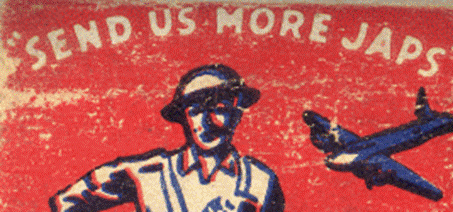 The defense of Wake Island in December 1941 became one of the only bright spots in a month of disasters for the United States and its Allies in the Pacific. A tiny garrison of Marines, Sailors, Army radiomen, and civilian contractors held out from Dec. 8–23 and even stopped the first Japanese landing attempt cold, sinking two destroyers and inflicting heavy casualties in the process. Early war coverage turned the defenders of the tiny atoll into instant heroes.
Perhaps the most famous line to come out of the siege of Wake Island is an apocryphal reply to a supposed message from higher headquarters. When the defenders of Wake were asked what they needed after their stunning rebuff of the Japanese invasion, the Marines allegedly replied: "Send us more Japs!"
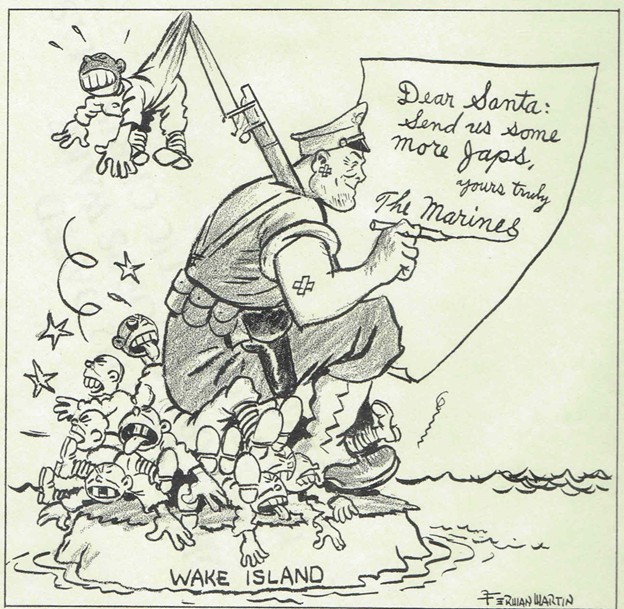 It's a killer quote, up there with Gen. Anthony McAuliffe's "Nuts!" answer at Bastogne and Oliver P. Smith's Korean War line about fighting in another direction. But as cool as Wake Island's cowboy response is, it also almost certainly never happened .
Historian Gregory Urwin and others have traced how the phrase spread in wartime media, not from any authenticated dispatch from Wake but from stateside reporting and public-relations storytelling. The line was repeated, embroidered, and eventually treated as fact, even long after the battle and World War II was over.
The Naval Officer actually in command on the island, Cmdr. Winfield Cunningham, later explained that outgoing coded messages from the island were padded with nonsense phrases to confuse enemy codebreakers. Somewhere between Wake and Pearl Harbor, the padding included "send us" and "more Japs" as the padded junk words. The phrases were then misread as the actual content of a message (as was expected), and a propaganda legend was born. Cunningham's account of that process appears in his memoir and is echoed in later retellings.
There's a nice irony here: the real story of Wake—the one that includes disciplined gunnery, improvised air operations, civilians volunteering for gun crews—is actually more interesting than this cartoonish one-liner. But the line stuck, because it sounded exactly like what Americans wanted defiance to sound like in December 1941.
War makes great fertilizer for legends. The worse the fighting gets, the more people cling to stories that prove human beings haven't completely forgotten how to act like human beings. The Christmas Truce of 1914 is one of those stories: a rare moment of peace in one of the ugliest wars in history.
 But over the last century, the truce has picked up a lot of baggage. Along the way, there was one big soccer match, everyone along the Western Front joined in, and it became a magical day when World War I "stopped." The real story is a lot more complicated, and in a way, more impressive.
The Truth
By December 1914, World War I was only a few months old and already a nightmare. What was supposed to be a quick war had bogged down into trenches stretching from the North Sea to Switzerland. Men lived knee-deep in mud, under constant artillery barrages, staring at the same enemy sandbags day after day.
Nobody in charge planned a Christmas break. Political and military leaders had every intention of fighting straight through the holidays. A few church figures (including Pope Benedict XV) called for a ceasefire, but governments ignored them. The people who actually stopped fighting were the ones in the trenches.
Along parts of the British–German line in Flanders, the days leading up to Christmas brought a freeze that hardened the mud into something like solid ground. As Christmas Eve approached, German units began placing candles on their parapets and small trees along their trench lines. They sang carols in German as British troops, understandably suspicious, watched through periscopes with fingers on triggers.
Then the call-and-response started. Germans sang "Stille Nacht." British troops answered with "The First Noel." Shouted insults turned into shouted greetings. Someone yelled "Merry Christmas!" in broken English. Someone on the other side yelled it back.
At first, men just poked their heads above the parapet. Then a few brave idiots climbed all the way out. Once nobody got shot for that, others followed.
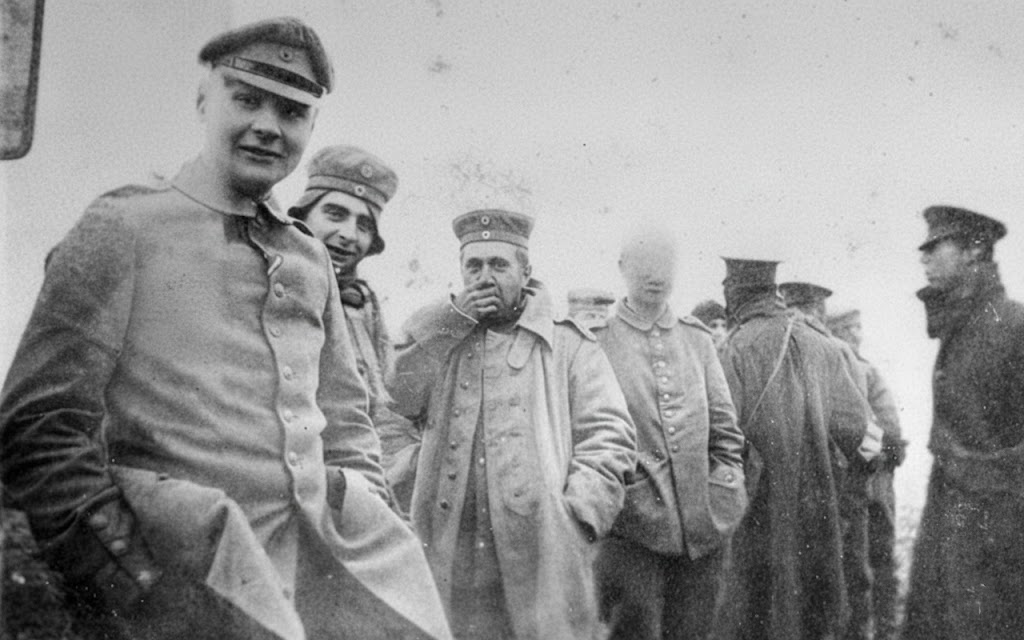
 What emerged from that was not a single coordinated ceasefire but a patchwork of local truces. In some sectors, British and German troops met in no man's land, shook hands, swapped cigarettes and photographs, and agreed not to fire for a while. In others, nothing happened; the guns kept going, and anyone who tried to fraternize would've been in serious trouble. The truce was real, but it was never universal.
In the places where the truce took hold, the scene really was surreal. No man's land, usually a place you crossed only to attack or drag back the wounded, turned into a meeting ground. Men pulled the frozen bodies of their dead comrades back for burial and sometimes held joint services. They shared food and drink: Germans had sausage and beer, the British brought bully beef and plum pudding. There was French wine and bread where French units joined in. They compared uniforms and traded buttons and badges as souvenirs.
And yes, there was football (soccer for you Yanks).
Multiple letters and diaries talk about soldiers kicking a ball around in the mud. Sometimes it was a real soccer ball; sometimes, something improvised. These weren't FIFA-regulated matches with proper goals and a referee; they were more like "30 guys sort of chasing the same object around until everyone gets tired."
The famous "Germans 3, British 2" score you hear in a lot of retellings comes from a single later recollection and is almost certainly more story than stat line. It's not wrong to say they played football; it's just wrong to imagine a single grand match in which the entire front dropped everything to form teams and keep score.
In many sectors, the unofficial truce bled into Christmas Day. Some places even stretched it into the 26th. In a few spots, men worked out l ittle arrangements like "we'll shell that tree at 10:00, so don't be near it," a darkly practical way of reducing casualties while still obeying orders to fire.
The Legend
So how did we end up with the simplified, "one big soccer game and everyone stopped fighting" version?
First, newspapers at the time loved the human-interest angle. Stories about enemies shaking hands, singing hymns, and playing football cut through a sea of casualty lists and grim communiqués. Details blurred together. Different units' experiences soon became one "Christmas truce story."
Then came memory. For veterans who lived through four years of trench warfare, that one odd moment of decency stood out. When they told their children and grandchildren, the edges naturally got smoother. A dozen small football games became one game. Scattered pockets of ceasefire became "the day the war stopped."
Finally, there's us. We like clean narratives. "Enemies stopped shooting everywhere for one day" is easier to hold onto than "some units in some sectors cut deals while others didn't." The myth does what myths do: compresses complicated reality into something you can put in a school play or a three-minute Christmas ad.
 Commanders on both sides clamped down after 1914. Orders went out banning fraternization. By Christmas 1915, the war was even uglier. By then, the war had expanded with gas attacks, higher stakes, and more profound hatreds. There was no repeat on the same scale.
The Christmas Truce didn't end anything. The war dragged on until 1918. Some of the men who shook hands in no man's land probably killed each other later. By any practical measure, the truce was a glitch, not a turning point.
But that's the point.
In a war famous for its industrial, impersonal killing, thousands of men still managed to look across barbed wire and see something human staring back. They did it without orders, rewards, or guarantees that they wouldn't be shot for their trouble the next day.
The legend version—one huge soccer game, the whole front singing together—makes it look magical. The real version is messier and, in its way, braver: cold, scared, exhausted soldiers choosing, just for a night, to be people first and uniforms second, knowing full well that the guns were coming back on in the morning.
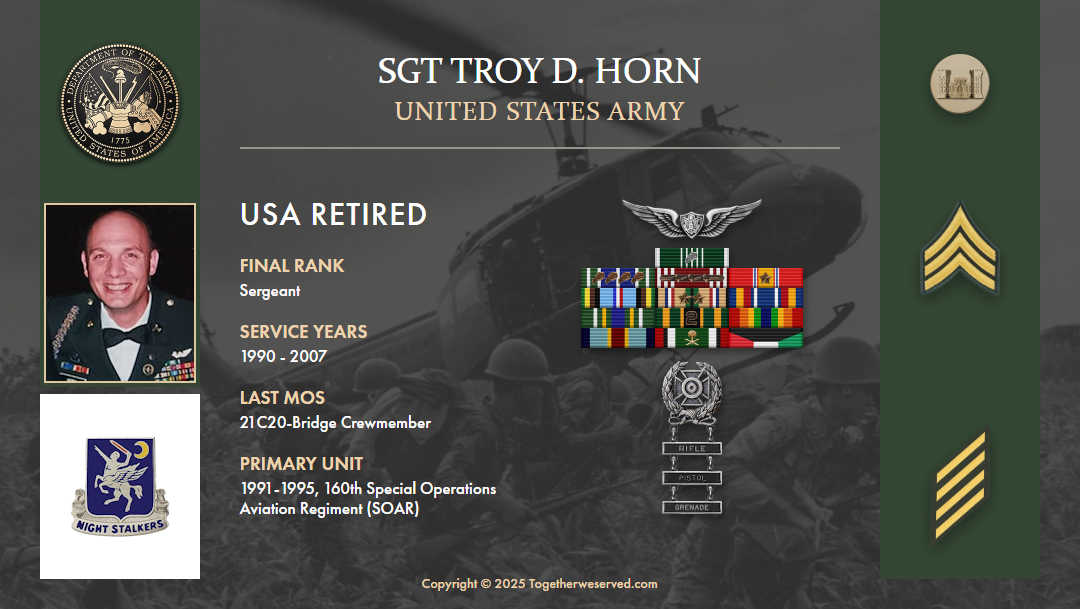
I remember when TWS first started, and I signed up immediately. I've enjoyed seeing friendly faces and remembrances of what seems now to have been several lifetimes ago. I haven't bothered to search for anyone until last month, when a close friend of mine passed. But now that I'm back, I look forward to a shared community of Brothers and Sisters and the continuation of our shared service.
Sgt Troy Horn, US Army (Ret)
Served 1990-2007
"Courage is doing what you're afraid to do.
There can be no courage unless you're scared."
Eddie Rickenbacker, Major, USAAS
 The 94th Fighter Squadron is a unit of the United States Air Force 1st Operations Group located at Joint Base Langley-Eustis, Virginia. The 94th’s primary weapon system is the F-22 Raptor at this time. Throughout its full course and its precursor units, the 94th has been assigned to 70 different stations worldwide, and since its inception, has flown 43 different airframes. The 94th was officially the first American squadron representing American air forces to arrive on the WWI Western Front. The emblem design was adopted because it was symbolic of Uncle Sam throwing his hat into the ring—the Squadron insignia, Hat-in-the-Ring, suggested by Capt. Paul M. Walters, Med. Corps Surgeon was adopted, and Lieutenant Wentworth was assigned the task of drawing the proposed insignia. The squadron was previously using the 103's emblem. Just prior to the group’s deployment overseas in 1942, former 94th Aero Squadron Ace, Capt Eddie Rickenbacker successfully lobbied for reinstatement of the 'Hat In The Ring' symbol as the official Group insignia of the 94th Fighter Squadron.
The 94th FS is one of the oldest units in the United States Air Force, first being organized on 20 Aug 1917 as the 94th Aero Squadron of the United States Army Air Service at Kelly Field, Texas. The squadron deployed to France and fought on the Western Front during World War I as a pursuit squadron. It took part in the Champagne-Marne defensive; Aisne-Marne offensive; St. Mihiel offensive, and Meuse-Argonne offensive.
In 1924, it was consolidated with the 103d Aero Squadron (Pursuit). The 103d was largely composed of former members of the French Air Service Lafayette Escadrille (from the French Escadrille de Lafayette). This was a squadron of American volunteer pilots who had joined the French Air Service prior to the United States' entry into the war on 6 Apr 1917. In July 1926, with the disestablishment of the U.S. Army Air Service, the squadron became part of the U.S. Army Air Corps (USAAC).
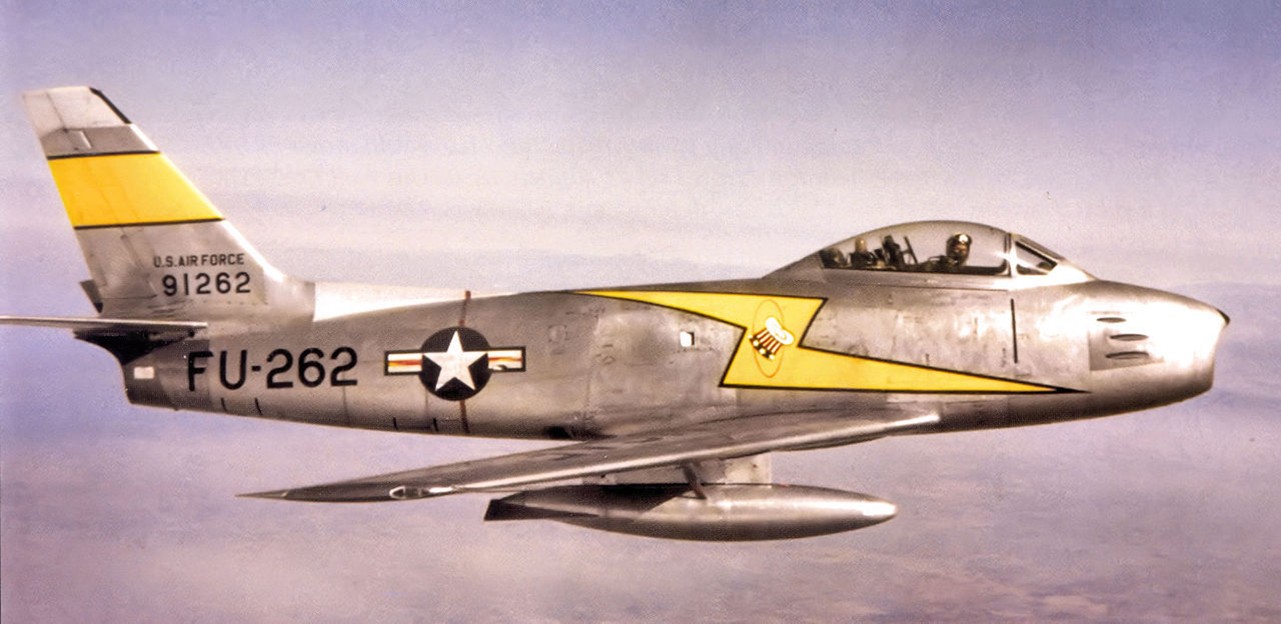 In June 1941, the squadron became part of the renamed U.S. Army Air Forces (USAAF). During World War II the unit served in the Mediterranean Theater of Operations (MTO) as part of Twelfth Air Force as a P-38 Lightning fighter squadron, participating in the North African and Italian campaigns. In September 1947, it became part of the newly established United States Air Force (USAF). During the Cold War it was both an Air Defense Command (ADC) fighter-interceptor squadron, and later as part of Tactical Air Command (TAC). It was one of the first USAF operational squadrons equipped with the F-15A Eagle in January 1976. With the disestablishment of TAC in 1992, it was assigned to the newly established Air Combat Command (ACC).
The 94th Fighter Squadron provides air superiority for the United States and allied forces by engaging and destroying enemy forces, equipment, defenses or installations for global deployment as part of the 1st Fighter Wing. Air Force TWS currently lists one-hundred and twenty-one members who have served with this iteration of the 94th.
The squadron flies one of today's most advanced air dominance fighters, the F-22A Raptor, being the USAF's second operational F-22 squadron in 2006. 94th FS aircraft, like other aircraft from the 1st Fighter Wing, have the tail code "FF".
In May 1942, all pursuit groups and squadrons were re-designated "fighter". In November the 94th Fighter Squadron entered combat in North Africa during Operation Torch. Based in Algeria, Tunisia, and Italy, the 94th again distinguished itself in combat by winning two Presidential Distinguished Unit Citations as part of the 1st Group. In addition, the squadron earned 14 Campaign honors, participating in almost every campaign in North Africa and Europe. 64 pilots of the 94th Fighter Squadron were credited with 124 Axis aircraft destroyed. The 94th produced a total of six aces in World War II. In April 1945 the 1st Fighter Group received two YP-80 jets for operational testing.
 The 94th Fighter Squadron did not deploy to Southwest Asia for the first Persian Gulf War, although many of its pilots and maintenance personnel did as augmenters to both the 71st and 27th Fighter Squadrons from the 1st Fighter Wing. The 94th successfully supported the UN-sanctioned Operation Southern Watch and Operation Northern Watch in Iraq with many deployments to Saudi Arabia and Turkey in the period leading up to the Iraq War. The 94th Fighter Squadron pilots repeatedly defeated Iraqi surface-to-air missiles (SAMs) and anti-aircraft artillery (AAA) attacks while enforcing UN sanctions, without loss or damage to a single aircraft.
The 94th performed the first operational deployment of the F-22 to the CENTCOM area of responsibility in 2011. They continue to demonstrate Air Superiority and lethality in the fight against foreign enemies, recently completing the first combat employment of the Small Diameter Bomb from an F-22. Today, the “Hat in the Ring” stands as a cohesive combat-experienced team ready for any call to support our nation's security requirements. The 94th continues the traditions of the Lafayette Escadrille, waiting to face any challenge, anywhere.
The reknown Red Baron once announced, perhaps apocryphally, his realization that red was the most unwise choice for a color of his aerial warcraft. Today, the 94th FS is poised to, and shall, engage enemies foreign and domestic, flying skins which the Baron and America’s contemporary or future opponents could not acquire a sight line on in aerial battle, though they boast of their prowess. While there are no widely known sp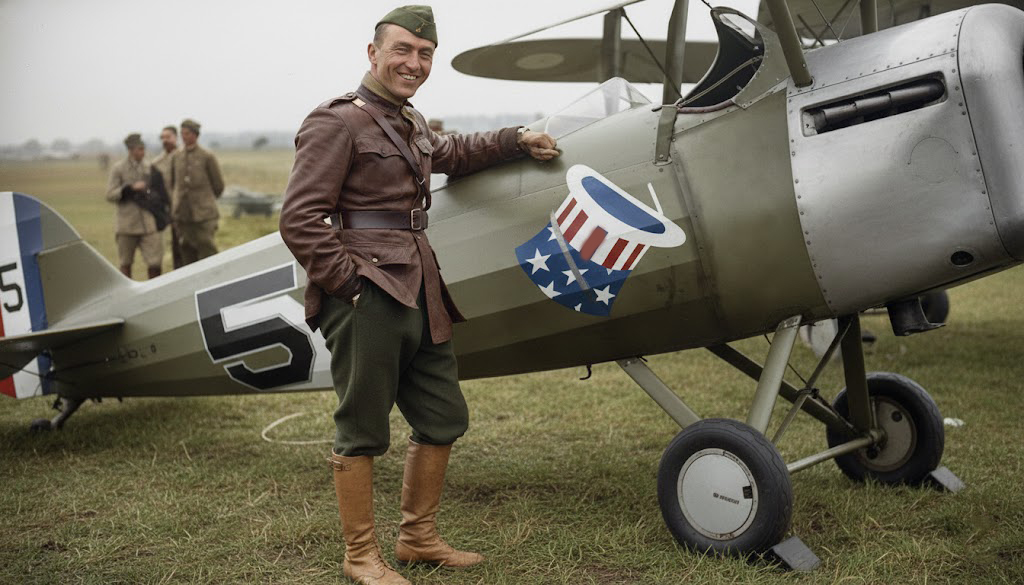 ecific poems written solely for the 94th Fighter Squadron itself, the squadron is often associated with the classic aviation poem "High Flight" by John Gillespie Magee Jr., a fellow fighter pilot.
The "High Flight" poem is deeply ingrained in the culture of military aviation and is often referenced by members of the U.S. Air Force and such notables as the late POTUS Ronald Reagan. The themes in "High Flight" - the exhilaration of flight, the bond with the sky, and proximity to the divine - resonate strongly with fighter pilots from all branches, squadrons, and eras.
“Oh! I have slipped the surly bonds of Earth
And danced the skies on laughter-silvered wings;
Sunward I've climbed, and joined the tumbling mirth
of sun-split clouds,—and done a hundred things
You have not dreamed of—wheeled and soared and swung
High in the sunlit silence. Hov'ring there,
I've chased the shouting wind along, and flung
My eager craft through footless halls of air.
Up, up the long, delirious, burning blue
I've topped the wind-swept heights with easy grace
Where never lark, or even eagle flew—
And, while with silent lifting mind I've trod
The high untrespassed sanctity of space,
Put out my hand, and touched the face of God.”
Motto:
AIR DOMINANCE -- ANYTIME, ANYWHERE!
By Capt John Wallace, US Navy (Ret)

Shortly after my return from up country, the MACV SOG Headquarters moved from its somewhat isolated location in the Cho Lon suburb to the more secure, high-rent district of downtown Saigon, taking over General Westmoreland's old MACV I compound on Rue Pasteur. Westmoreland and his staff had moved into a new facility on Tan Son Nhut Airbase, a much larger and more secure location from which to direct the war. This new Tan Son Nhut building was identical to buildings I had been in in the Washington, D.C. area, but with access to strategically placed bunkers in the event of enemy attack.
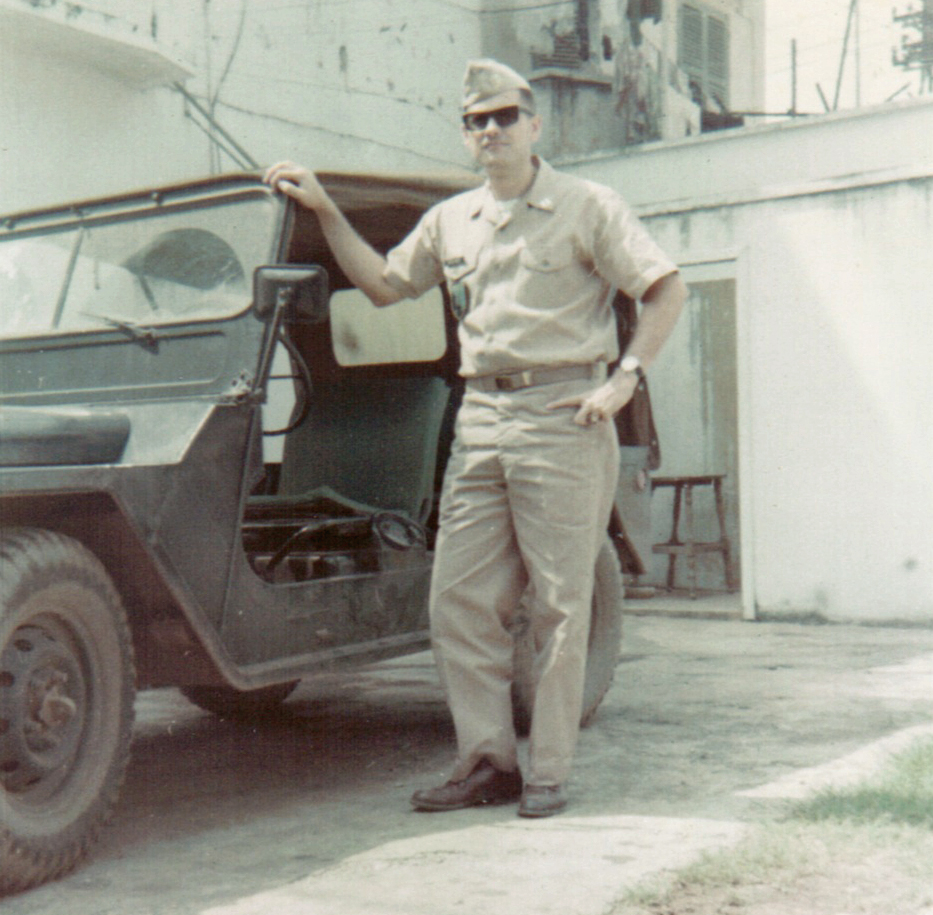 With SOG's move across town, I had to bid an emotional farewell to my 9th floor luxury accommodations with the intermittent electricity and water, and relocate to a 3-story structure within walking distance of the new SOG compound. Life definitely got better with this move. Whereas I had long ago accepted that the day would start and end with a 9-story hike up/down the narrow stairway of my quarters (I quit using the elevator even when it worked, knowing that fate would eventually place me between floors during a power outage), I could now slog my way up one flight of stairs and be "home."
The change in neighborhood was not entirely without its drawbacks. Proximity to the Palace and the American Embassy, both of particular interest to VC gunners, made life a little more exciting than living in the urbs. A favorite enemy pastime was to lob Soviet-made 122mm rockets in the direction of these high-value targets. The "rocket belt" around Saigon described an area located at a distance from the Palace matching the nominal range of the 122mm rocket. After dark, VC gunners would creep into the "belt", quickly set up and fire, and be gone before allied forces could respond.
This hurry-up launch procedure resulted in zero hits on the Palace or Embassy, but lots of anxiety for the neighbors. The Indian Consulate, next to my quarters, received a direct hit one night; and a number of times rockets hit close enough to take out windows and splatter our building with shrapnel. The first time it happened, I rolled out of bed and groveled around on the floor in the dark looking for a hiding place; but over time I realized that they fired only one rocket at a time, so whether it landed on me or not, there was no point in looking for cover. It was times like that when I sort of longed for the tranquility of Cho Lon. The night of January 31, 1968, and in the days immediately following, however, Cho Lon was not a good place to be.
Historians have described the Tet Offensive as the turning point of the Vietnam War. In spite of overwhelming losses, North Vietnam, with the aid of skewed media reporting, convinced the U.S. public that the U.S. was losing the war. For me, the Tet Offensive began in the wee hours of the Tet New Year (1 Feb.) with the sound of nearby small-arms fire. After the first bursts, the firing continued off and on well into the new day. A sign was posted on the gate of our quarters to stay off the streets. I decided to try to make my way to the SOG compound, where I might be of some use. When I stepped out through the gate, it was positively eerie: the normally busy street was completely deserted, and in the background, bursts of gunfire could be heard in every direction.
As I carefully made my way along the street, Swedish K at the ready, a jeep roared up, and two MPs asked me where I was headed. They then suggested it would be safer to ride with them. Our route took us past the side gate of the Palace, where several bodies in civilian clothes lay sprawled in the street. The MPs pointed out the armbands which identified them as VC (worn so they wouldn't shoot each other). These particular troops had been hiding in a building under construction across from the gate -- a building they had slipped into the day before and past which I obliviously strolled the previous evening.
 As we pulled up to the SOG compound, a jeep full of American civilians screeched to a halt in front of us. They were from the American Embassy and were looking for ammunition. The VC had breached the Embassy wall and was on the grounds of the compound. The sounds of a pitched battle could be heard from that direction. Eventually, Marine security guards would kill all the attackers before they could enter the building.
As the day wore on, the extent of the offensive became clear. VC and NVA regulars had attacked almost every major city and allied military installation in South Vietnam. As darkness fell on that first day, the enemy troops around and in Saigon began to make their way through the city streets, taking cover in areas where it was almost impossible to bring fire to bear without endangering the civilian population. As darkness fell on Saigon on the night of February 1, 1968, allied forces were confronted with a very difficult situation -- how to dislodge the enemy from the city while avoiding civilian casualties. After the previous night's surprise offensive, VC and NVA regulars had hunkered down in various parts of the city, waiting for the cover of darkness to press their attacks. Despite heavy losses, units continued to infiltrate the city from staging areas in the countryside.
At the SOG compound, we received a steady stream of reports of enemy movements along the city streets and through the outlying areas of downtown Saigon. The ubiquitous parachute flares were only a slight comfort. An alert of imminent attack on the SOG compound came from a helicopter hovering in the vicinity -- a squad-sized VC unit had been spotted making its way in our direction.
My office space was on the ground level in the old MACV I communications center, somewhat isolated from the SOG main building because of the highly classified material and crypto devices required for special communications I operated in support of SOG operations. One of my highest priorities was to ensure that none of this material fell into enemy hands, even if I had to destroy it. Armed with two thermite grenades and my trusty Swedish-K 9mm submachine gun, I took up a position in the office doorway, prepared to toss the grenades into the classified equipment and document area if the SOG compound were breached. I recall thinking how vulnerable I felt facing the paved courtyard of the MACV I compound -- a mortar or grenade on that surface would spray lethal shrapnel in all directions.
Location reports on the advancing squad of VC stopped coming over the radio, and we began to wonder if it was a false alarm. Suddenly, the distinctive "whump" of an outgoing small-caliber mortar round made us aware that the phantom VC squad had set up a mortar position across Rue Pasteur in the backyard of a civilian home directly across from our front gate.
Fortunately for us, the mo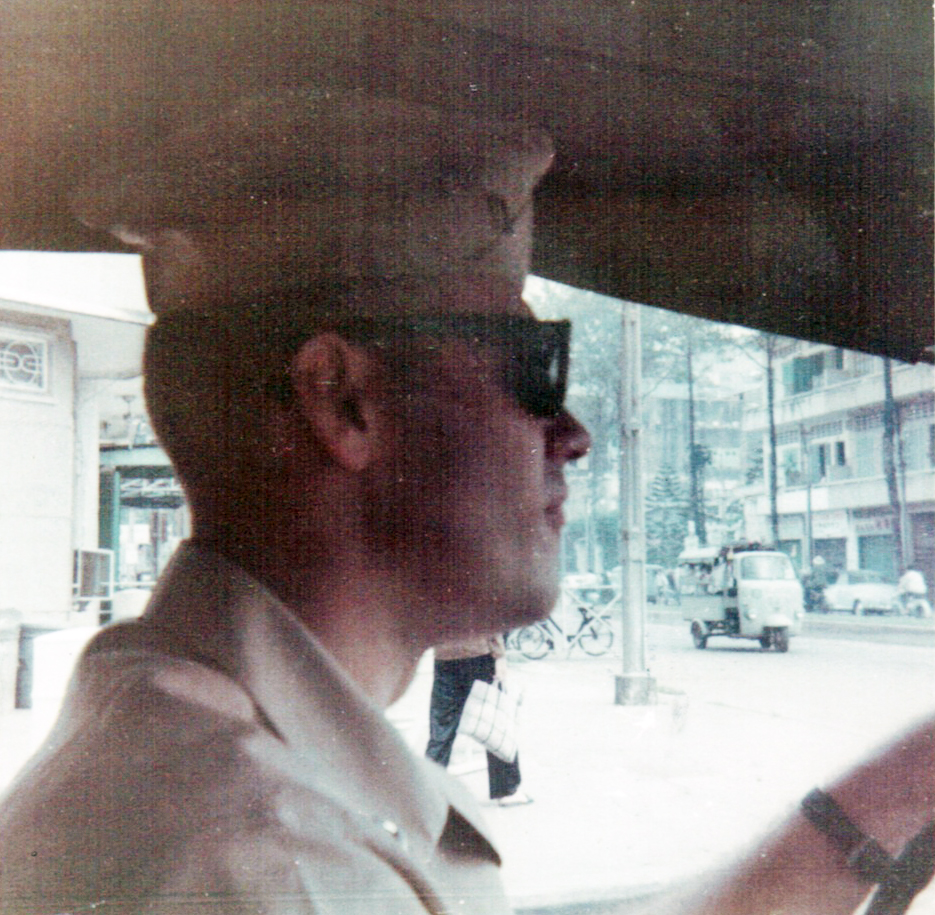 rtars were being fired parallel to Pasteur toward the river, directed at the Rex and Brinks hotels where senior U.S. and allied officers were billeted. One of the SOG troops made his way to the top of our building to get a better angle on the mortar crew and began firing tracers to mark their position for a gunship strike. Once their position was compromised, the squad faded into the night. Over the next several days, pockets of resistance were isolated and destroyed. I recall the surreal situation of barbequeing steaks on the roof of the Rex Hotel while watching the daylight airstrikes on VC positions out by the racetrack and around Cho Lon.
I had heard that Cho Lon took a pretty bad beating during the offensive, so one day, after things had returned to their pre-Tet normality, I drove back to the old "hood." What a disaster area! Block after block had been turned into rubble. It looked like a scene out of WWII or the Watts riots -- a few building facades remained standing, but mostly there were piles of debris. This was the last area cleared of the enemy, at great cost to the businesses and homes of the civilian population. The thriving pre-Tet Chinese community had virtually disappeared.
The Tet Offensive marked the midpoint i n my one-year tour of duty. The remainder of the tour was, frankly, unremarkable. Somewhere about mid-tour, an almost imperceptible attitude adjustment took place in many who served in Vietnam, probably related to a growing realization that perhaps you really were going to make it through. The change was manifested in a greater sensitivity to potential risk and inversely related to the number of days remaining before the tour rotation date. I never met anyone in Vietnam who didn't know exactly how many days he had remaining in country ("x" days and a wakeup).
It helped to be associated with such an effective and professional organization such as SOG. That professionalism was due in large part to the Chief of the organization, COL Jack Singlaub, whose WWII service with the OSS and unconventional warfare knowledge made him particularly well suited to lead this elite group of volunteers.
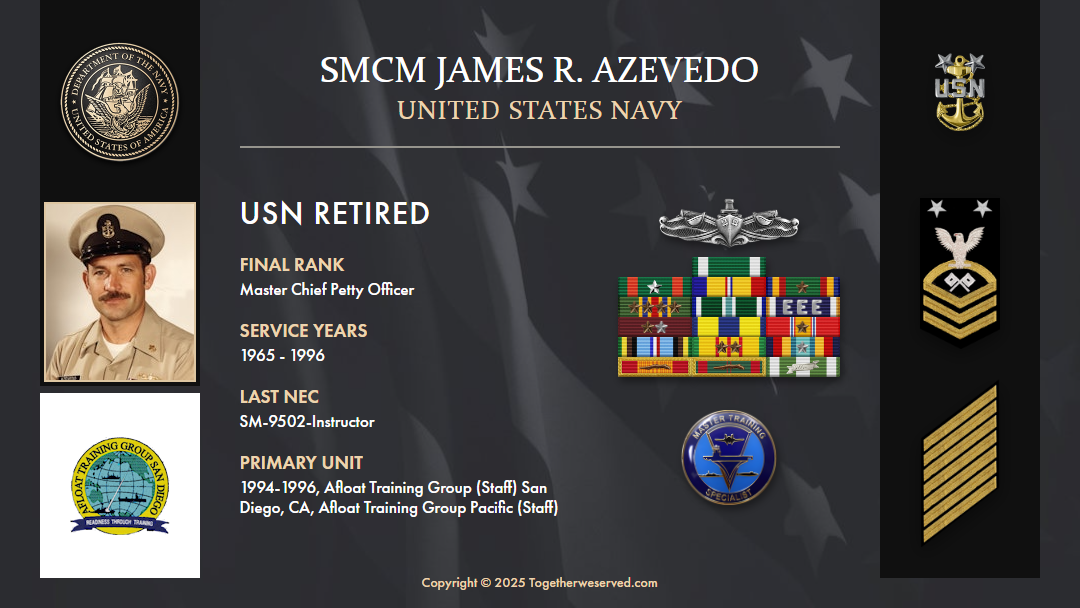
The services and support provided by Together We Served are truly exceptional. Through their work, they make certain that the experiences and contributions of veterans are not forgotten. Their dedication is evident in their commitment to fostering strong connections among veterans, both from the past and present.
The continued efforts of Together We Served are crucial in maintaining the spirit and memory of military service for generations to come. By honoring and sharing these stories, they ensure that the values and sacrifices associated with military service remain a vibrant part of our collective history.
I extend my heartfelt salute to the Together We Served team for their unwavering commitment to the veteran community. Their ongoing dedication makes a lasting impact and truly honors the legacy of those who have served.
SMCM(SW) James Azevedo, US Navy (Ret)
Served 1965-1996
By SP 4 Rick Turton, US Army

I have no recollection of anything specific we talked about that day. I’m sure the weather was involved because we always spoke of the weather in Georgia. He gave me words of advice, I’m sure, because that’s what he always did when he was going somewhere longer than overnight. His words soft, sweet, gentle.
 More than once in the last few days, I’d seen him looking at the triangular walnut case on the mantle. There was a picture beside the flag; a man he’d never met; a picture of his father, her husband, in his Army dress uniform, strong, proud. A smaller picture, stuck in the corner of the frame, corners curling, fading. Her husband, seated on a row of sandbags at some nameless firebase in Viet Nam.
Conversation quietly came to a comfortable close; neither of us wanting to talk of the actual matter.
Her son pushed his breakfast plate aside. Looking at it one last time, eyes smiling but sad, knowing, “I always liked those plates, Ma, with the barn and the cows and the bright yellow & green edges.
Reaching across, I found his hand and squeezed it. His hands were callused, course and rough and scratchy from too many summers in the fields. I tried to smile, but my eyes leaked a little, tracing my feelings down my cheeks. I turned away and quickly pulled the hanky from my sleeve as I tried to wipe away the sadness.
The sun was fully up now. He stood, pushing back his chair. Looking at me, smiling, he said, “I reckon I’d better be goin’; that bus’ll be along any minute. And you know ole’ Bob; he won’t wait for no one.” He reached down and picked up his yellow and green cup and finished off his coffee. “I think I’m gonna’ miss this most Ma. You always make the best coffee.”
As I stood, I reached into the pocket of my apron and said, “It’s the chicory, Donny, takes the bite off. Here, I packed a little bag of it for you!” and gave him a little hand sewn bag stuffed with ground chicory.
As he took the bag, his hands held mine for just a moment longer. Then he looked down at his highly polished shoes and whispered, “Thanks, Ma, thanks for everything. I love you.”
 I stepped in closer and hugged him tight, “I love you too, Donny. Always remember that.” He reached around me, engulfing me in those strong arms of his, and hugged me back, this time just a little longer than usual. Abruptly, he stepped back and reached for his dress green jacket and put it on. He put on the soft dress cap the Army gave him, picked up his duffle bag, and slung it over his shoulder.
As he reached the doorway, he rested his hand on the doorjamb. He looked at the old, weathered wood with all the pencil marks on it showing his progress in growing up to get to this day. He turned and looked around again, gathering it all in like he was photographing the scene in his mind. He smiled a little once again, gave a half wave, and walked out the door, letting the screen door slam once more.
That’s when I knew.
A Barrio Sailor's Journey In Vietnam
By Raúl Herrera


In "Capturing Skunk Alpha: A Barrio Sailor's Journey in Vietnam," author Raúl Herrera does something a lot of Vietnam books promise but very few deliver: he keeps you at "deck level" the whole time and still shows you the bigger war.
On the surface, it's the story of one mission: the July 1967 hunt for a North Vietnamese resupply trawler, codenamed "Skunk Alpha," and the small Swift Boat, PCF-79, that helped stop it cold off the coast of Quang Ngai. A Navy patrol plane spots a "suspicious trawler" heading toward a shoreline with no port as a four-ship task force forms inside the 12-mile limit. When warnings are ignored, PCF-79 is ordered to open fire, leading to a nighttime ship-to-ship brawl that ends with the trawler forced aground at the mouth of the Sa Ky River, more than 90 tons of ammunition and supplies denied to VC and NVA forces.
That alone would justify a book; it's the kind of compact, kinetic action story that usually gets told from 30,000 feet. Herrera was there. He was the boat's radioman and radar operator, manning the gear, listening to the coded calls, and watching the echoes on the scope as his boat closed to within a few dozen yards of an armed trawler in the dark. The book's promise is that you will see this mission through his eyes, and on that count, it delivers.
But what makes "Capturing Skunk Alpha" more than just a single-operation war story is the other half of the subtitle: "A Barrio Sailor's Journey in Vietnam." Herrera isn't a career officer writing from the wardroom. He grew up in a West Side barrio in San Antonio, 12 years of Catholic school, no money for college, and a recruiter's promise of drafting school that evaporated as soon as he hit boot camp.
That background shapes the book in meaningful ways. The early chapters track his path from that neighborhood creek in San Antonio to the Navy training center in San Diego, to a brutal round of SERE training, complete with mock interrogations, cold-water torture, and the lesson that resisting to the bitter end can get you killed for real if you ever become a prisoner.
Those experiences don't sit in the book as random war stories; they explain how a skinny, feisty Mexican-American kid who wanted to be an architect becomes the calm voice on the radio and the guy watching the radar when everything suddenly becomes very real.
The Swift Boat material is where the book really earns its keep. Herrera walks the reader through how the U.S. ended up with 50-foot aluminum boats, initially designed for oil work in the Gulf of Mexico, suddenly repurposed as coastal gunboats under Operation Market Time. He explains what a PCF is, how a six-man crew actually lives on one, and what "brown-water navy" patrol work looks like when you're hugging a hostile coast at night, checking junks, and hoping you're right about who's friendly and who isn't.
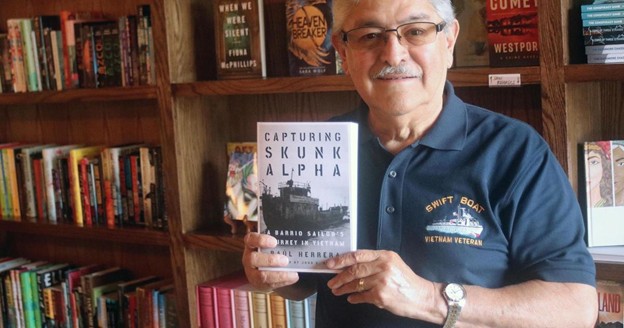 Because the memoir grows out of his own oral history and years of talking with other Swift Boat veterans, the detail has that "only someone who was there would bother to remember this" texture: the nicknames, the ad-hoc uniform standards, the enlisted club called the Straw Elephant, where they tried to scrub 24 hours of fear off with bad music and beer. It's not a generic Vietnam backdrop; it's a very specific slice of the war that doesn't usually get the spotlight.
When the book finally arrives at the Skunk Alpha mission, you understand exactly who is on that boat and how they got there. You know Boatswain's Mate First Class Bobby Don Carver, the salty lead petty officer who "knights" Herrera with the barrio-coded nickname "Bean" and later hand-loads the 81mm mortar round that slams into the trawler's pilothouse and forces it ashore. You also know that for Herrera, Carver's story doesn't end with that victorious night or the awards ceremony where the crew is decorated by Premier Nguyễn Cao Kỳ and Chief of State Nguyễn Văn Thiệu and feted for keeping those 90-plus tons of ammunition out of enemy hands.
The book's emotional core is pride—Herrera and his crew have every right to it—but there's also a hard look at cost, survivor's guilt, and what it means to carry one violent night, and one dead shipmate, around for decades.
Stylistically, Herrera has been writing and talking about this for a long time. He's published in "Vietnam" and "Sea Classics," and museums and oral-history projects have documented his story, and that polish shows. He knows how to explain technical things (radar echo clutter, gun mounts, patrol sectors) without losing a general reader, and he can switch from procedural detail to raw feeling in a sentence or two. The voice is conversational, sometimes wry, sometimes blunt, very much "senior vet telling you a sea story at a reunion" in the best way.
Are there trade-offs? Probably. Readers who want a high-level policy postmortem on Vietnam, or a neat "lessons learned" chapter on counterinsurgency, won't find that here. Herrera's focus never really leaves the deck plates, the coastline, and the small human circle of his crew and their war. Some civilians may also find the acronyms and place names a lot to track, though, to his credit, he usually gives enough context that you're not lost for long.
But those caveats are minor next to what the book actually gives you: a rare, ground-truth look at the Navy's coastal war, told by someone who was literally on the radio net the night a steel-hulled trawler came out of the dark and ran into six very determined young men on a 50-foot boat.
In the end, "Capturing Skunk Alpha" works on three levels at once: as an action story about a daring intercept mission, as a coming-of-age tale of a barrio kid who finds himself on the sharp edge of U.S. power, and as a veteran's long, uneasy conversation with his own ghosts. It's a valuable addition to the Vietnam shelf, especially if your picture of the war so far has been all rice paddies and helicopters and not nearly enough dangerous water under a thin aluminum hull.
Get it on Amazon in Kindle eReader or in paperback for $10.15, or purchase it directly from the author. It's also available in MWR libraries.