Together We Served has reconnected more military veterans than any other organization or website. If you served in any branch of the US military, stay connected with those you served with by joining TogetherWeServed.com.
Note From the Editor
This issue of Dispatches includes a fascinating story about the highest decorated Japanese American of the Vietnam War. We also cover the origins of the tradition of leaving coins on tombstones. We have another story on the USS Barb. The only submarine ever credited of sinking a train. We hope you'll enjoy them.
Please let me know your comments regarding your Dispatches - things you like and things you like less. Also please contact me with any stories or articles you would like considered for publishing. I can be reached at [email protected].
All information for Bulletin Board Posts and Reunion Announcements please send to [email protected]
Happy Holidays from all of us at Together We Served.
Lt Col Mike Christy U.S. Army (Ret)
CONTENTS
1/ View Your Entry in Our Roll of Honor!
2/ Vincent Okamoto-The Vietnam War's Most Highly Decorated Japanese American
3/ Preserve Your Old Photos: Let Us Help for Free!
4/ Military Myths & Legends: Leaving Coins on Headstones
5/ Do You Still Have Your Boot Camp/Basic Training Photo?
6/ Battlefield Chronicles: The Amazing History of the USS Barb (SS 220)
7/ Featured Military Association: Marine Corps League
8/ The War in Laos: Why Still Secret?
9/ Have A Military Reunion Coming Soon?
10/ Bases, Places, and Memories: A Slight Diversion in Vietnam
11/ New Together We Served Military Store
12/ Destroyer Veterans Group Makes Major Donations
13/ TWS Bulletin Board
14/ TWS Person Locator Service
View Your Entry in Our Roll of Honor!
As a fitting tribute to our Members of Together We Served, your service to our country is now honored in our Roll of Honor, the most powerful online display of Living, Fallen and Deceased Veterans existing today. Our 1.67 million Veteran Members, who served from WWII to present day, now have a dedicated entry displaying a brief service summary of their service and their photo in uniform if posted.
You can find your Roll of Honor entry easily - click on the graphic below and select your service branch. Then enter your Last Name in the search window at top right and scroll down. Please check your entry for accuracy and Log in to TWS to update any information on your Profile Page, such as your Last Unit, and add your service photo for completeness if you haven't already done so.
If you have any questions regarding your entry in our Roll of Honor, please don't hesitate to contact us at [email protected] or contact our Live Help Desk at the bottom left of your TWS website.
Vincent Okamoto-The Vietnam War's Most Highly Decorated Japanese American
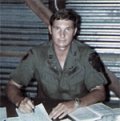
Vincent Hichiro Okamoto - featured in the PBS film 'The Vietnam War' by Ken Burns and Lynn Novick - was born November 22, 1943, in Poston, Arizona, War Relocation Center, where his family was interned during World War II. He was the youngest of the ten children of Henry and Yone Okamoto.
Following the family's release in 1945 at the end of the war, they moved to South Chicago, where his parents ran a small grocery store. The family later moved to Gardena, California, when he was twelve years old. He attended Gardena High School, where he served as senior class president. He was a three-year letterman in track and football and belonged to the Men's Honor Society.
Okamoto attended El Camino College from 1962 to 1965. From 1965 to 1967 he attended the University of Southern California receiving a Bachelor of Arts degree in International Relations in 1967. He enrolled in Reserve Officers Training Corps (ROTC) and was the first non-UCLA student to be commissioned through the UCLA ROTC program. He earned his commission as a U.S. Army 2nd Lieutenant.
Serving in the military was an Okamoto family tradition: All six of Okamoto's older brothers served in the military. Two fought in Europe during World War II with the 442nd Regimental Combat Team, and another brother served with the First Marine Division during the Korean War. This family trend of serving in the armed forces would later influence Okamoto's decision to volunteer to go to Vietnam in the late 1960s.
After receiving his commission in the infantry, Okamoto went through fourteen months of intensive combat training - including parachute and Army Ranger training at Ft. Benning, Georgia.
In 1968, he went to Vietnam, where he served in various capacities as an airborne ranger, infantry platoon leader, rifle company commander, and battalion intelligence officer, before he came back to the United States in 1970.
His first assignment was the intelligence-liaison officer for two months for the Phoenix Program while attached to Company B of the 2nd Battalion, 27th Infantry 25th Infantry Division - based at Cu Chi Chi, some 14 miles northwest of Saigon, an area honeycombed with miles of Vietcong tunnels. Following his two months with the Phoenix Program, he was assigned as a platoon leader in B Company.
During the conduct of a village search, his platoon didn't find any weapons or communist literature. Since it was a particularly hot day and his men tired, Okamoto ordered a prolonged lunch break and then moved his RTO, platoon medic and interpreter into a particular house. There were three women inside and a babe in arms, including a kid about four years old. In one corner, an elderly woman was cooking rice. Okamoto's attention was drawn to the hot, steaming rice - something he had not eaten for months - wanted some. He got his interpreter to ask the grandma that they will give her a pack of cigarettes, a can of C-Ration turkey loaf, and a can of peaches for some of that steamed rice and fish and vegetables. When asking for seconds, Okamoto's RTO said, "Damn, ain't these people poor enough without you eating their food?" Okamoto responded, "They've got enough rice here to feed a dozen men" And then it dawned on him: they did have enough rice to feed a dozen men. He hurriedly asked his interpreter to find out why so much rice. The interpreter turned to the old women, demanding to know 'Who is all this rice for? And she said, 'no biet, no biet, no biet - I don't know, I don't know, I don't know.' That was enough for the Americans to look around more carefully. The search uncovered a tunnel entrance hidden beneath straw matting.
Okamoto threw a phosphorous grenade into the tunnel. After the smoke cleared, seven or eight bodies were pulled from the tunnel and thrown out into the town square. The bodies were so charred they couldn't be identified. The women that lived in that house with all the rice were squatting down, wailing.
"I think that was the first time I knew that I personally had killed people. I got an 'Atta boy' from the company commander. It wasn't something that had any glory in it, or made me feel a real sense of accomplishment" said Okamoto.
Over that summer, Okamoto was wounded twice and made 22 helicopter combat assaults, four of them as commander of Bravo Company. The success or failure of a given mission was measured by enemy body count. "Field commanders were told very succinctly," Okamoto recalled. "We needed to rack up as much body count as we could. How many enemy did you kill today? A kill ratio determined whether or not you called a firefight a victory or a loss. If you kill twenty North Vietnamese or Vietcong and lost only two people, they declared it a great victory."
On the morning of August 23, Okamoto made his 23rd combat assault. 19 helicopters ferried the first and second platoons to a new landing zone (LZ) just 13 miles from the Cambodian border near Dau Tieng district of Binh Duong Province in the Southeast region of Vietnam. Their task was to do again, stay put, and somehow block a battalion of some 800 North Vietnamese troops who were trying to escape back across the border.
Okamoto's company was reinforced by a platoon of mechanized infantry, three APCs, and a tank, but they were still badly outnumbered. He and the fewer than 150 men under his command spent the rest of that day and all of the next preparing for an attack as best they could - setting Claymore mines and hanging coils of razor wire.
At about 10 o'clock on the night of August 24, Okamoto remembered, "We got hit with a very heavy mortar barrage. Within the first 10 seconds, all three of those armored personnel carriers and tanks were knocked out with rocket-propelled grenades (RPGs).
Trip flares briefly lit up the landscape. Scores of enemy troops were running at the Americans through the elephant grass. Enemy mortar shells blasted two gaps in the razor wire. If Okamoto and his outnumbered men couldn't plug them, they were sure to be overrun. He and the four men closest to him held their M-16s above their head and fired blindly.
The enemy kept coming. "I had my four people. And through the light of the flares, I yelled, 'a couple of you guys go in man the machine guns on those APCs.' The response I got was like 'screw you, I ain't going up there.' That was enough for me to run to the first armored personnel carrier, pull out the dead gunner out of the tournament. I jumped in there, manned the machine gun and fired it until I ran out of ammo." Okamoto moved to the second disabled APC, then the third, emptying their guns.
"They were still coming at us. I crawled out there, till I was about 10 meters from them. I killed them with hand grenades." Two enemy grenades fell near him. He managed to throw back both. But a third landed just beyond his reach. Shrapnel fragments peppered his legs and back. "I just knew for sure I was going to die. I thought, 'Hey Okamoto, you're not going to make it out of here. Mom's going to take it hard, but you're not going to make it out of here.' That's liberating. When you know you're going to die, the fear leaves. At least in my case, I was no longer afraid. I was just mad because here are all these little guys trying to kill me. If that's the case, then I'm going to make it as tough on them as they possibly can before I go down. I killed a lot of brave men that night. And I rationalize that by telling myself, 'well, maybe what you did - just maybe - saved the lives of a couple of my men.'"
During the night the enemy slipped over the border into Cambodia, dragging as many of their dead with them as they could. A third of Okamoto's company had been lost.
For his efforts that day, Vincent Okamoto received the Distinguished Service Cross, the U.S. Army' second highest honor. He also received a Silver Star Medal and two Bronze Star Medals for valor and several Purple Heart Medals. By the end of the war, he was the most highly decorated Japanese-American to survive the Vietnam War.
For Okamoto, the real heroes were the men who died - nineteen, 20-year-old high school dropouts. Most were draftees. They didn't have escape routes that the elite and the wealthy and the privilege had. They looked upon military service like the weather: you had to go in, and you'd do it. But to see these kids, who had the least to gain - there wasn't anything to look forward to. They weren't going to be rewarded for their service in Vietnam. And yet, their incident patients, their loyalty to each other, their courage under fire was just phenomenal. And you would ask yourself, "How does America produce young men like this?"
Following his discharge from active service in 1970, Okamoto began giving thought of going to law school. "I really did say to myself - and it sounds kind of corny - that if I am fortunate enough to live through this experience, then when I get back to the world - to America - I'd like to go through something that has rules, where people don't throw grenades at each other and shoot at each other," Okamoto said. "So I gave law school a shot."
On the whole, law school proved to be less than enjoyable for Okamoto. But that did not deter him from going on to establish himself as a lawyer and, later, a judge.
"I hated law school," Okamoto said. "In fact, I still look back and think law school was, other than Vietnam, probably the most unpleasant period of my life."
For him, law school proved to have its own challenges and shortcomings. Coming back from three years in the U.S. Army - two of which were spent overseas - to law school at USC took some getting used to.
"I certainly didn't set the legal academic world on fire when I was in law school," he said. Having never associated with "study-mongers" in a classroom context, he "really had to work his tail off to survive academically."
There was also the issue of the disparity he felt between himself and his classmates, who were usually several years younger and had never served in the military. "It was hard for me to come back from Vietnam and then listen to some young, twenty-four-year-old prodigy out of Harvard or Yale who's talking about life experiences," Okamoto said, recalling that disconnect with his law school peers when it came to lived experiences.
Though there were relatively few trial lawyers who were role models for Japanese Americans in the early 1970s, the few who were around helped the up-and-coming wave of young Japanese American attorneys.
"There were a few, and fortunately, those few worked hard, were well-thought of, so new guys like me were the beneficiaries of their positive appearances," Okamoto said. "I look back on being a deputy district attorney as some of the better times of my life."
In the mid-1970s, as a young deputy district attorney, Okamoto took part in the founding of the Japanese American Bar Association (JABA). Speaking to the reasons for his role in the formation of JABA, Okamoto emphasized the need for role models for the younger people in the community.
"At the time, I thought, in the event that more Japanese Americans become attorneys, we're going to need some kind of organization - some mentoring if you will. And that's what JABA started out to be," Okamoto said.
"I think at the first or second installation dinner, we had a total turnout of forty people. And that's with families and spouses, and all that," Okamoto said. "You go to the JABA installations now, and multitudes and legions of people come out - some very, very prominent in politics, some in the legal community."
JABA installation dinners now boast attendance in the hundreds and prominent guests from the legal community. Speaking to the growing ranks of JABA and its accomplishments since its inception, Okamoto lauded the direction of the organization.
Okamoto prosecuted criminal cases under the aegis of the deputy district attorney until 1978, when he started practicing private law with a former law school classmate.
"I wanted to make some money," Okamoto said, explaining why he eventually decided to start his own practice. "Another former deputy DA that I'd gone to law school with, we left the DA office together, opened up shop and put out a shingle."
As relatively new and young lawyers with their own practice, they struggled initially to find clients and to establish themselves. Eventually, though, they made a name for themselves as a firm and went on to represent notable clients like the port of San Pedro.
"It was a learning experience, starting down at the bottom rung of the ladder and having to climb up," Okamoto said. "It took us a couple years before we actually made a profit, so it was tough on us, it was tough on our families, but it's a rite of passage."
Okamoto's military service continues to inform his community involvement. He has served in the past as president of the Japanese American Vietnam War Veterans Memorial Committee. In the late 1980s, he led the committee to establish plans for the Japanese American Vietnam Veterans Memorial at what is now the National Japanese American Veterans Memorial Court, located at the Japanese American Cultural and Community Center (JACCC) in Los Angeles' Little Tokyo. The black granite memorial lists the names of 114 Japanese Americans who were killed in action or are missing in action in Vietnam.
Speaking to the valor of the Japanese Americans who decided to fight for the United States during World War II, Okamoto highlighted the fierce patriotism that led them to fight for a country that had placed nearly 120,000 Japanese Americans into inland concentration camps. "Having been denied due process, having been imprisoned behind barbed wire stockades, they still felt a love of country and felt it was their duty to go serve and fight for the very country that had confined them," Okamoto said. "That's part of the Japanese American experience in this country. It's something that's unparalleled."
"I consider the Japanese American Vietnam Veterans Memorial one of my more noteworthy accomplishments," Okamoto said. "And once we did that, then the Korean War vets said, hey, we should do the same thing. So two and half years later they put up their monument. Then the World War II guys said, hey, here are these little punks from Vietnam, and our younger brothers from Korea, we should have one for our people."
With the addition of a memorial for the Japanese Americans who fought in the Korean War and in World War II, the National Japanese American Veterans Memorial Court features the name of all the Japanese Americans who were killed in the conflicts of the United States.
"To me, the significance of that is the Japanese American community, their loved ones, and friends can go there to commune with those that died in the war. But it tells America, and the public at large - hey, all Japanese Americans didn't go to pharmacy school, or become dentists, or doctors, or engineers," Okamoto said. "The Japanese Americans paid with their life's blood to be able to live in mainstream American society, and if you don't believe me, go on down to the JACCC and look at the names of over twelve hundred Japanese Americans who were killed in America's wars."
In 2002, California's Governor Gray Davis appointed Okamoto to the Los Angeles County Superior Court bench. Okamoto had submitted an application for a judgeship at the encouragement of his mentors, role models, and friends in the Japanese American legal community.
"I was fortunate enough to get an exceptionally well-qualified rating, and then I had to go to Sacramento to be interviewed," Okamoto said. "I think I just lucked out, or maybe I fooled them. I'm not quite sure. But after about four or five months, it was kind of neat. I get the call from Burt Pines, the appointments secretary, then he says the governor's on the phone, and bingo, with a stroke of his pen, I'm a judge."
Davis personally swore Okamoto in as a judge on August 26, 2002, at the Nisei Veterans of Foreign Wars facility in Gardena. Since then, Okamoto has enjoyed his role on the Superior Court bench. "I'm a fan of trial courts, and what I'm doing now as a judge is probably the best job I ever had in the world," Okamoto said.
Among Okamoto's other achievement are two books documenting the stories of veterans. The first, 'Wolfhound Samurai' (2008), is an autobiographical account of the Vietnam War in novel form to minimize the hurt to actual people, according to Okamoto. The second, 'Forged in Fire' (2012), tells the story of Hershey Miyamura, a Japanese American Medal of Honor recipient and distinguished Korean War veteran.
Do you have old photos from your service days stashed away in a drawer or in a shoe box in your attic? Old photos fade with time and if they are not scanned and preserved digitally, they risk eventually being lost forever.
This is where TWS can help. We have just invested in a high quality Fujitsu book and photo scanner that can scan any size of photo or yearbook. As a service to our members, we would like to offer you a free photo scanning service for your most significant photos from your service which we will then return to you, in original condition, along with a CD containing your photo files.
In addition, we can upload your photos for you to your Photo Album on your TWS Service Profile which will also appear in your Shadow box and available to you to access or download at any time.
Please contact us at [email protected] for full details on this Free Service.
Military Myths & Legends: Leaving Coins on Headstones
Humans have been leaving mementos on and within the final resting places of loved ones almost from the beginning of the species. Excavations of even the earliest graves uncover goods meant to serve the deceased in the next world, such as pottery, weapons, and beads.
The earliest known coins date to the late seventh century B.C., and as societies began embracing such monetary systems, the practice leaving of coins in the graves of citizens began yet another way of equipping the dear departed for the afterlife.
Mythologies within certain cultures added specific purpose for coins being left with the dead. In Greek mythology, Charon, the ferryman of Hades, required payment for his services. A coin was therefore placed in the mouth of the dear departed to ensure he would ferry the deceased across the rivers Styx and Acheron and into the world of the dead rather than leave him to wander the shore for a hundred years. In England and the U.S., pennies were routinely placed on the closed eyes of the dead, yet the purpose of that practice was not clear - some say it was to keep the eyes of the corpse from flying open (even though the eyes, once shut by the person laying out the body, do not reopen).
In these more recent days, coins and other small items are sometimes discovered on grave markers, be they plaques resting atop the sod or tombstones erected at the head of the burial plot. These small tokens are left by visitors for no greater purpose than to indicate that someone has visited that grave. It has long been a tradition among Jews, for example, to leave a small stone or pebble atop a headstone just to show that someone who cared had stopped by. Coins, especially pennies, are favored by others who wish to demonstrate that the deceased has not been forgotten and that his loved ones still visit him.
Sometimes these small remembrances convey meaning specific to the person buried in that plot. For more than twenty years, every month someone has been leaving one Campbell's Tomato Soup can and a pocketful of change on the plain black granite tombstone that marks the grave of Andy Warhol. The soup can is easy to explain, given Warhol's iconic use of that commodity in his art, but the handful of change remains a bit of a mystery. In a similar vein, visitors often leave pebbles, coins and maple leaf pins at the grave of Canadian Prime Minister Lester B. Pearson, the man who replaced Canada's Red Ensign with the Maple Leaf flag.
While visiting some cemeteries you may notice that headstones marking certain graves have coins on them, left by previous visitors to the grave.
A coin left on a headstone or at the grave site is meant as a message to the deceased's family that someone else has visited the grave to pay respect.
For Military, leaving coins of different denominations denote their relationship with the deceased. Leaving a penny at the grave means simply that you visited. A nickel indicates that you and the deceased trained at boot camp together, while a dime means you served with him in some capacity. Leaving a quarter means you were there with them when they took their last breath.
The earliest reference to this practice we've found so far dates only to June 2009, when it appeared as a website post. A version now commonly circulated an e-mail appears to have been drawn from it, albeit some changes have slipped in, such as, "A buddy who served in the same outfit, or was with the deceased when he died, might leave a quarter", becoming "By leaving a quarter at the grave, you are telling the family that you were with the Fallen when he/she was killed".
According to tradition, the money left at graves in national cemeteries and state veterans cemeteries is eventually collected, and the funds are put toward maintaining the cemetery or paying burial costs for indigent veterans.
In the U.S., this practice became common during the Vietnam War, due to the political divide in the country over the war; leaving a coin was a more practical way to communicate that you had visited the grave than contacting the Soldier's family, which could devolve into an uncomfortable argument over politics relating to the war.
Some Vietnam veterans would leave coins as a "down payment" to buy their fallen comrades a beer or play a hand of cards when they would finally be reunited.
Today, military folk do sometimes leave very special remembrances at the graves of deceased servicemen: challenge coins. These tokens identify their bearers as members of units and are prized and cherished by those to whom they have been given; thus, any challenge coins found at gravesites were almost certainly left there by comrades-in-arms of the deceased.
Next time you visit a cemetery, leave a coin. And now you know.
Do You Still Have Your Boot Camp/Basic Training Photo?
Together We Served has a growing archive of more than 10,000 Boot Camp/ Basic Training Graduation Photos which we now display on your Military Service Page and Shadow Box. We also have a growing collection of Yearbooks which we will be making available on the site shortly.
We are still searching for Boot Camp/ Basic Training Photos and Yearbooks. So if you have yours available, please contact us at [email protected] or call us on (888) 398-3262.
Either you can send us a scanned file of your photo or you can send it to us for scanning. We will add this for you to the Recruit/ Officer Training section of your Military Service Page.
All photos and yearbooks will be returned to you in original condition along with a CD containing your scanned photo.
Battlefield Chronicles: The Amazing History of the USS Barb (SS 220)
When it comes to submarine action during World War II, there are a number of standouts, and among them is the submarine USS Barb (SS 220). But what makes Barb unique? No other submarine can boast a train on its battle flag.
There can't be a story about USS Barb without mentioning one of the submarine's main characters: commanding officer Lt. Cmdr. Eugene B. Fluckey. The Washington, D.C.-native was to Barb as chocolate is to peanut butter.
While there are many fascinating tales about Barb during World War II, this one, in particular, is during the sub's 12th and final war patrol that began in June 1945. The sub, crew and her skipper were still basking in the glow of Barb's 11th war patrol that earned Fluckey the Medal of Honor and the Presidential Unit Citation for the crew of the submarine. He had previously earned four Navy Crosses.
But Fluckey wasn't about to rest on his or the sub's laurels after bargaining a fifth war patrol from Adm. Charles A. Lockwood, Commanding Officer of Submarine Force Pacific Fleet. The Gato-class, diesel-powered submarine was soon sinking Japanese supply transports off the northern coast of Japan in the Sea of Okhotsk. The submarine also fired the first sub-launched ballistic missiles onto Japanese soil, thanks to a request by Fluckey to add that weapon system during the submarine's overhaul.
Fluckey had observed trains bringing supplies and materials to enemy ships on the northern Japanese island of Karafuto. They were already successful in stopping supplies getting to the fleet by transport ships. Why not keep the supplies from even getting to the transport ships, he thought.
The crew began to ponder how to take out the train. Placing charges under the tracks and detonating them as the train went by was too dangerous, Fluckey determined, because it put the shore crew at risk.
But Barb's crew had taken to heart Fluckey's mantra: If there is a problem, find the solution.
According to Fluckey's book "Thunder Below!" Engineman 3rd Class Billy Hatfield offered that solution. The Ohio native recalled as a young boy placing nuts between the railroad ties. When the rails sagged as the trains rolled over them, the shells cracked. They could devise a micro-switch, tie it between two ties and the train would detonate its own bomb, just like cracking shells on a nut. Hatfield asked to lead the shore party.
There was no shortage of volunteers, including a Japanese POW onboard the Barb, Fluckey recalled in his book. First, they had to meet Fluckey's criteria: The remaining seven volunteers had to be unmarried, a fair mix of regular Navy and reserve, represent all departments, and at least half were former Boy Scouts. Why Boy Scouts? As a former Scout, Fluckey knew they had been trained for medical emergencies and what to do if they got lost.
Four days later, the weather provided enough cloud cover to darken the moon and Barb inched to within 950 yards of the shore.
At just after midnight on July 23, 1945, Fluckey's commandoes slipped into their small boats. Fluckey advised the crew what to do if things went wrong, according to a passage in his book: "Boys, if you get stuck, head for Siberia, 130 miles north, following the mountain ranges. Good luck."
Less than a half-hour later, Navy Sailors were the first American combatants to set foot on one of Japan's homeland islands:
Chief Gunners Mate Paul G. Saunders, USN
Engineman 3rd Class Billy Hatfield, USNR
Signalman 2nd Class Francis Neal Sever, USNR
Ship's Cook 1st Class Lawrence W. Newland, USN
Torpedoman's Mate 3rd Class Edward W. Klingesmith, USNR
Motor Machinist's Mate 2nd Class James E. Richard, USN
Motor Machinist's Mate 1st Class John Markuson, USN
Lt. William M. Walker, USNR
As with most missions, this one had its fair share of unplanned moments. The men were off on their bearings and landed near the backyard of a Japanese home. Although dog prints on the beach had the crew on high alert, luckily both human and canine occupants remained asleep.
The eight men plowed through rustling waist-high bulrushes crossed a highway and with their path obscured by darkness, took a tumble or two down unexpected drainage ditches. Upon reaching the tracks, three men set up guard stations. Markuson climbed a water tower to assess the landscape only to discover it was a lookout post. He silently crept back down, never waking the sleeping guard.
Alerted to the snoozing sentry above, the train crew worked quietly to dig the holes for the 55-pound explosive charge and detonator switch. Before they finished, however, an express train bore down the tracks, forcing the crew to scatter into the brush until it rumbled by.
Finally, all that was left was the most dangerous part of the mission - setting up the detonator switch. Fluckey ordered only Hatfield to be on the tracks during that procedure, but all seven crewmembers disobeyed as they nervously peered over the engineman-s shoulder as he connected the pressure switch.
Ninety minutes from when they left, the shore crew signaled they were headed back. Fluckey had eased Barb to within 600 yards of shore. Fifteen minutes later, with the crew halfway to safety, another train thundered down the track toward its final destiny. The need for stealth evaporated.
"Paddle like the devil!" Fluckey bellowed through a megaphone to his men. At 1:47 a.m., the 16-car train hit the detonator. The explosion sent pieces of the engine into the sky like a fireworks display. Five minutes later, all of the men were back on Barb. Upon reaching deeper water, Fluckey ordered all non-essential hands on deck to witness their achievement - "sinking" a train on Japanese soil.
Barb's final patrol ended Aug. 2, 1945, at Midway. A few days later, the nuclear bombing of Hiroshima and Nagasaki brought about the Japanese surrender and the end of World War II.
The submarine's battle flag reflected Barb's remarkable accomplishments: 12 war patrols, five in the European Theater and seven in the Pacific; six Navy Crosses, 23 Silver Stars, 23 Bronze Stars and a Medal of Honor earned by members of the crew; a Presidential Unit Citation, a Navy Unit Commendation, and eight battle stars; 34 merchant ships damaged or sunk; five Japanese warships damaged or sunk, including the 22,500-ton escort carrier Unyo; rocket and gun symbols to denote shore bombardments, and ever so improbably, a train to commemorate Barb's final war patrol.
Yet if you asked Fluckey which of the awards and recognitions represented on Barb's battle flag he was most proud of, he would say it was the one medal not on the flag "the Purple Heart. Despite sinking the third most tonnage during World War II. " 17 enemy vessels, 96,628 tons and a 16-car train - not a single Sailor's life was lost or wounded on USS Barb.
A remarkable feat that earned the submarine, skipper and her Sailors their share of World War II fame.
Featured Military Association: Marine Corps League
Together We Served is pleased to feature one of our Association Partners, the Marine Corps League.
The Marine Corps League perpetuates the traditions and es spirit de corps of ALL Marines and Navy FMF Corpsmen, who proudly wear or who have worn the Eagle, Globe and Anchor of the Corps.
MCL was founded in 1923 to World War I hero, then Major General Commandant John A. Lejeune. Its Federal Charter was approved by An Act of the Seventy-Fifth Congress of the United States of America and signed and approved by President Franklin D. Roosevelt on August 4, 1937. The League is the only Federally Chartered Marine Corps related veterans organization in the country.
Since its earliest days, the Marine Corps League has enjoyed the support and encouragement of the active duty and Reserve establishments of the U. S. Marine Corps. Today, the League boasts a membership of more than 60,000 men and women, officer and enlisted, active duty, Reserve Marines, honorably discharged Marine Veterans, qualified Navy FMF Corpsmen and qualified Navy FMF Chaplains and is one of the few Veterans Organizations that experiences increases in its membership each year.
If you would like more information on the Marine Corps League and how to join, please contact MTWS member Bob Borka at [email protected] or visit their website at https://www.mclnational.org/
The War in Laos: Why Still Secret?
By Steve Sherman
U.S. Army
Michael Rose, a retired Army captain, received a well-deserved Medal of Honor last month. The videos and reports I have seen and heard indicate that everything was extraordinarily well done. I would, however, like to offer one minor quibble.
The citation which Mike received stated that his actions took place "deep within enemy-controlled territory." While this is factually correct, it is also misleading. Staff Sgt. Fred Zabitosky received a Medal of Honor with the same notation (DA GO 69-27). After some time and, I believe, court intervention, the awards was reissued with a change reading "within enemy-controlled territory in Laos" (DA GO 91-23). Why is this important?
In 1962, Averell Harriman, Ambassador at Large in the Kennedy Administration, negotiated an agreement meant to establish the neutralization of Laos. The United States withdrew the U.S. Military Assistance Advisory Group in Laos 666 military advisors from Laos in accordance with this agreement. The North Vietnamese ceremonially withdrew 25 personnel, leaving well over 10,000 North Vietnamese troops in Laos. The United States failed to respond strongly to this total negation of the agreement and, for many years, pretended to accept the myth of North Vietnamese withdrawal. When it was required to act out of due diligence against those forces, it established elaborate ruses to do so; Project 404 (sheep-dipped military personnel acting as Assistant Military Attaches) and CIA-led Hmong and other elements in Laos, and cross-border operations by MACV-SOG from Vietnam. The consequences of this facade were well-documented in Norman B. Hannah's "The Key to Failure: Laos & the Vietnam War" (Madison Books, 1987).
GI's in Vietnam usually attributed it to an effort by the State Department to preserve Harriman's historical legacy, dubbing the Ho Chi Minh Trail as "The Averell Harriman Memorial Highway." The U.S. denied it had any military forces in Laos, when, in fact, the small numbers of military personnel engaged in Laos were there solely because of a much larger, and also denied North Vietnamese presence. Thus, in 1969, Fred Zabitosky's Medal of Honor and other awards to SOG personnel engaged in cross-border operations were written up with the phrase "deep within enemy-controlled territory."
In 1970, when the Government of Cambodia permitted U.S. and South Vietnamese forces to enter its country and engage the North Vietnamese forces that were occupying vast tracts of Cambodia, they also closed the port of Sihanoukville to the transshipment of supplies to those North Vietnamese forces. It became evident that the bulk of the Communist material was coming through Cambodia. The North Vietnamese recognized this and determined to expand and secure their supply route through Laos on the Ho Chi Minh Trail. One of the actions they took, in September 1970, was to attack Laotian and CIA forces on the Bolevens Plateau in order to expand their control westward. MACSOG personnel conducted Operation Tailwind at the request of the ambassador in Laos, to distract the North Vietnamese and relieve the pressure on units on the Bolevens. Mike Rose received his award for actions in Tailwind that received attention because of the totally bogus story aired by CNN in 1998.
By denying an American presence in Laos, the historical record has been misconstrued, beyond the operational aspects that affected the outcome of the war. In the recent Ken Burns and Lynn Novick documentary, episode 2 (1961-1963) states that "Kennedy sent the Green Berets to the Central Highlands of Vietnam to organize mountain tribes to fight the Viet Cong to undertake covert [emphasis added] missions to sabotage their supply bases in Laos and Cambodia," as though this was an illegitimate action undertaken by the U.S. Ken Burns accepts the presence of Communist sanctuaries in those countries without questioning the self-imposed restraints by the U.S. Later, in discussing the failed ARVN Operation Lam Son 719 in Episode 9 (May 1970-March 1973), he points out that "by the end of 1970, both houses of Congress had barred all U.S. ground personnel, even advisors, and special forces, from crossing the border," but he fails to chastise Congress for its one-sided proscription.
In the time frame of the Vietnam War, it may have been useful to designate operations as being "deep within enemy-held territory," under a flawed diplomatic policy. But in the context of history written post-war, that terminology is not only inappropriate, but it perpetuates misperceptions that color the public understanding of that history. It might be useful to find out who and why this terminology was used in Mike Rose's award citation, but it would be even more useful to correct the record. No one was shy about talking about Laos in the award ceremony, only in the award itself.
Stephen Sherman served with 5th Special Forces Group (ABN) in Vietnam. He is presently the editor of a series of books on the Second Indochina War and a principal contributor to a website devoted to correcting the Burns/PBS documentary of the Vietnam War, which can be found at http://wiki.vvfh.org
TWS has nearly 1.7 million members who served in a wide range of units, ships, squadrons and duty stations. Get more people to your Reunion by sending your Reunion information to us in the following format and we will post it for free in our Reunion Announcements on Together We Served, in emails that go to our members and in our Newsletters.
Please contact us at [email protected] with the following details of your Reunion:
Your Reunion Name:
Associated Unit or Association:
Date Starting:
Date Finishing:
Place Where Held:
City:
State:
Contact Person:
Contact Phone Number:
Contact Email Address:
Website:
Other Comments:
Bases, Places, and Memories: A Slight Diversion in Vietnam
By Von Hatch
U.S. Marine Corps
A friend of mine, Mile Legere, and I arrived at Danang, RVN in October of 1967. We were members of VMCJ-1, a photo reconnaissance and EW squadron flying the RF-4B Phantom, the EA-6A, and a version of the EF-10B Night Fighter left over from Korea. There had been a number of us arrive at the same time so there was some shuffling going on concerning permanent housing so we were temporarily housed in tents.
I came into the tent one afternoon on the second or third day we had been there and Mike was busy writing a letter. I casually asked who he was writing and he said, "Bobby Kennedy." "As in Senator RFK?" I asked "Yes." I said I didn't think we had been here long enough to complain to our Senators. He said he was asking for a New York state flag. I stated that it was unfortunate that he came from a state with so many people that his pleas would never be heard. He made some disparaging remarks about the remoteness and backwardness of Arizona and the race was on. He wrote to Sen. Kennedy and I wrote to Sen. Carl Hayden of Arizona.
I had my reply in a mail cycle plus a few days. Nothing from New York. I wrote back to the Senator to thank him for his efforts. He was unable to fill my request through his office, but he pointed me in the direction of the state official who could. In my correspondence with his office, I kept referring to the secretary who was really opening the mail assuming that she was a lovely example of the girl next door. He mentioned her name and after I quit writing the Senator, I started writing her. In the meantime crickets from New York. I wish I had Mike's later letters to the Senator because they were pretty caustic. Need I mention that my flag arrived before Mike heard from Kennedy? He finally mailed his driver's license to Gov. Nelson Rockefeller and said he would not be returning to New York.
Then the press got a hold of it and flags came to Mike from everywhere. From the selectmen in Schenectady, and, finally, Bobby Kennedy's office.
It is a silly little story but it was a great diversion and made for a war story that involved no violence. Suddenly it was the big thing in several squadrons - get your state flag and hang it up. There were a lot of them.
There are two interesting footnotes to this story: after the assassination of MLK there was much tension everywhere in Vietnam and the air wing was no exception. It was decreed that all flags would come down rather than removing just the ones that involved a Confederate motif.
The other is my continued correspondence with Ann, the secretary. After extending our tours, Mike and I came home on leave and I found myself in Washington DC and reached out to Ann. Her parents informed me that she was in Chicago at the convention. I finally reached her there (by this time she was Walter Mondale's secretary) and she said stop by the Hilton, so I did. We got into the convention to hear Mayor Daley let the rest of the Dems know how it is done in Chicago. Had the joy of sharing tear gas with the hippies being pounded on by Chicago's finest in Grant Park. Wined and dined on the finest the Hilton could send up paid for by the DNC. Livin' large. Twenty or so very exciting hours in my life.
One other note - Mike never did go back to New York as promised. Instead, he married a Flagstaff girl and stayed.
New Together We Served Military Store
By popular request, we are pleased to offer our Members your very own Together We Served Military Store with a whole range of items to peak your interest including custom shirts and caps, jackets, decals, badges, automotive and items for the home.
Now you can also purchase custom Together We Served branded merchandise. Please check out our range of ball caps, polo shirts, T-shirts, jackets and windbreakers HERE.
Our Store is offered in cooperation with Military Best, one of the most trusted suppliers in the United States, who offer a 100% Satisfaction Guarantee on all items purchased. Many items are made in the USA and a proportion of the proceeds from your purchase help support our military's underfunded MWR programs.
We appreciate your feedback at [email protected] your comments regarding what you like, what you like less and if there are any additional items you would like us to stock.
Destroyer Veterans Group Makes Major Donations
Each year at the annual board meeting of the Historic Naval Ships Association (HNSA) in Annapolis, The National Association of Destroyer Veterans (Tin Can Sailors) makes a presentation of grants to our Tin Can Ship Museums. The Thomas J. Peltin Destroyer Museum Grant Program makes these grants possible. The program has over the last 20 years awarded grants totaling over 2 million dollars to Tin Can Ship museums in the U.S. including the USS Joseph P. Kennedy, Jr. (DD-850), USS The Sullivans (DD-537), USS Laffey (DD-724), USS Kidd (DD-661), the USS Orleck (DD-886) and USS Turner Joy (DD-951). In March of this year, TCS awarded $10,00 to each Museum and gave $5000 to HNSA and $1000 to the Navy and Marine Corps Relief Society.
Veterans and active duty personnel who served in a DD, DDG, DE, DL, DM, FF, AD, AR, APD, AVD, AVP, or other similar types of ships are eligible as are interested non-veterans and veteran family members. TCS helps veterans connect with shipmates or find out if their ship is having a reunion or learning how to contact former shipmates.
For information:
Tin Can Sailors, Inc.
Terry Miller, Executive Director
PO Box 100
Somerset MA 02726
1-877-TINCANS [email protected]
TWS Bulletin Board
If you wish to make a post to our new Bulletin Board - People Sought, Assistance Needed, Jobs Available in Your Company, Reunions Pending, Items for Sale or Wanted, Services Available or Wanted, Product or Service Recommendations, Discounts for Vets, Announcements, Death Notices - email it to us at [email protected].
Volunteer of the Month
ATCS Frank Nelson
US Navy (Ret)
(1972-1994)
ATCS Nelson has been a member of Navy Force Together We Served since Mar 13, 2007.
In 2012 Frank joined our Living History team where he reaches out to our older vets to see if he can help them complete their profiles and tell their stories.
In 2015 he joined our Profile Integrity Team.
Thank you, Frank, for all your hard work to make TWS the best it can be.
Service Reflections Video of the Month
#TributetoaVeteran - TCCM Dennis White, U.S. Coast Guard (Ret), 1972-1998
Looking for Army and Marine Corps Volunteers Memorial Team
Do you have a passion for making sure that all of our Fallen are not forgotten? This is the team for you. We have Fallen profiles that have either been orphaned or created by someone who has not been online for a very long time and there is nothing in those profiles. TWS is working to make sure that all of our Fallen profiles are as complete as possible.
If you're interested in joining our Memorial Team, please contact us at [email protected]
TWS Brochures Available
Do you have a reunion coming up and would like to spread the word about Together We Served? We now have brochures available that helps explain a little bit about who we are and what we do.
Send your requests to [email protected]. Please include your name and address along with how many brochures you require.
TWS Invite Cards
Did you know we have Together We Served invite cards that you can hand out to any veteran you meet? It even has a place to put your name, service branch and member number so you get credit for the invite.
If you would like some cards, email us your name and address to [email protected] and we will get them in the mail to you.
Behind the Scenes at Together We Served
Merry Christmas!
One of the many things that we deal with daily are members that have gotten a little frustrated because they can't find what they are looking for. We understand that. It is one of the many reasons we have created an online help desk. To find immediate assistance, click the orange banner at the lower left of any TWS page.
When you click it, you'll see something that says "Introduce Yourself". Put in your name, email address, and phone number. Those three bits of information help us get you an answer to your question in a timely fashion.
Once you have entered the information requested, type your message and click "Start Chatting". Easy as that.
You may use it again and it gives you an error that says "Complete Your Profile". If you see that, just click on the gray pencil at the top of the widget and enter your information.
You know TWS has probably the largest database of ranks, job codes and units online and we continue to add to it daily. Considering how long our military history is, we've done fairly well. We know we don't have everything, and that's where your help is needed.
We also know that there are some people that just throw up their hands and walk away rather than letting us know when they cannot find what they are looking for. We'd like to reach out to each of them and invite them to use our help desk or to email us directly with your question to [email protected] and we will be happy to try to find it for you or get it added if it is not currently in our database.
TWS Staff
Diane, Loyde, Darrell and Rowdy
From Our TWS Historian
We have a number of members asking for Operation or Battle that they don't know the name or if it is still classified. Something from 50 years ago is highly unlikely to be really classified. Very little is truly classified if you find it in documents on the Internet. Now if you give a wikileaks link, I will not post anything from there. I don't accept for face value things posted on Wikipedia. I have found too many errors on that site. I take it if is from a .mil, .gov or .edu site to be more reliable. If you give me the location, date, units involved and any other details I can find the Operation, Battle or Training Exercise for you.
We are striving to be historically accurate as a Military Heritage site. So if you are looking for a unit and the name looks almost the same it may not be the correct unit. We are adding dates to every one. Our Army site is the more complicated since unit change names every few years. For example if you added the 7th Cavalry Regiment. That unit now has dates of 1866 to 1943. If you added it you have to add the correct unit for your time period. All Army regiments went away when the Army converted to the Pentomic Army in 1957. After 1964, the new name would be 1st Battalion, 7th Cavalry Regiment. After 1972, the name changed again to 1st Squadron, 7th Cavalry Regiment.
On all the sites we are working on patches for all units. If you have a unit and there is no patch showing for it, please send in if you have it. Our graphics guy is a miracle worker and can put it on the unit for you. Again, thank you all for your patience and support as we work to make this site the best for you.
Regards,
Rowdy
Roger A. Gaines
LTC, SC (Ret US Army)
TWS Senior Military Advisor
Chief Historian and Database Manager
Reunions
Do You Have a Reunion Planned for the Norfolk Area?
If you do, please contact Diane Short at [email protected] to discuss doing a presentation for your reunion.
VA and Other News Do you know which VA benefits you may be eligible for?
No matter when you served, VA benefits may help you stay healthy, enhance your independence, refinance a home, obtain needs-based pension and do so much more.
Explore.VA.gov makes it easy for you and your family to learn about and apply for benefits. Explore.VA.gov connects you with benefit information for nine benefit and service areas, Veteran testimonial videos, application assistance and more.
Answer a few questions using the VA Benefits Navigator tool and find out which benefits you and your family may be eligible to receive.
Visit Explore.VA.gov to get started.
A System Worth Saving
VA health care is as good or in some cases better than that offered by the private sector on key measures including wait times, according to a study commissioned by the American Legion.
The report, issued Tuesday and titled "A System Worth Saving," concludes that the Department of Veterans Affairs health care system "continues to perform as well as, and often better than, the rest of the U.S. health-care system on key quality measures," including patient safety, satisfaction, and care coordination.
"Wait times at most VA hospitals and clinics are typically the same or shorter than those faced by patients seeking treatment from non-VA doctors," the report says.
The 17-page report was co-authored by Phillip Longman, a senior editor at the Washington Monthly and adjunct professor at Johns Hopkins University, and Suzanne Gordon, a healthcare journalist and assistant adjunct professor at the University of California at San Francisco School of Nursing.
The report comes at a time when the Trump administration, Congress, and the VA are considering a long-term overhaul of the Veterans Choice Program, which allows veterans to seek VA-funded care through private providers.
In July, Congress approved a $3.9 billion bill to extend the Veterans Choice Program on private care for six months. Funding for Choice had been due to run out in mid-August, according to the VA.
The Choice program, established after a 2014 scandal overextended wait times for care at VA medical facilities, allows veterans who face a more than 30-day wait for an appointment, or who must travel more than 40 miles to a VA facility, to instead seek VA-funded care through private providers.
In a memorandum last week to VA Secretary Dr. David Shulkin, the VA's Office of Inspector General warned that the Choice program continues to be plagued by problems with duplicate payments, overpayments, and a failure to offset payments against outside insurance coverage.
"These deficiencies must be addressed in the process of awarding additional contracts to any [contract payment processors] that may be selected for the future iteration of the Choice Program currently under consideration by Congress," the IG's Office said.
Since the Choice program's inception, the American Legion and other Veterans Service Organizations (VSOs) have cautioned against attempts to use it as a smokescreen to privatize the VA.
The Legion commissioned report says, "Although there are opportunities for VA to improve its performance by entering into partnerships with other health-care providers, no evidence supports the claim that privatizing VA or substantially outsourcing its services would bring veterans better care."
The report continues, "In evaluating the quality of VA care, one should first remember to ask an all-important question: "Compared to what?"
On wait times, "The entire American health-care system faces acute shortages of doctors, especially primary care physicians and mental health professionals. This means that even fully insured patients seeking care outside VA often face long wait times to see doctors," the report states.
The report cites numerous studies, including one by industry consulting firm Merritt Hawkins showing the wait time to get a first appointment with a private-sector doctor averaged 24 days in 15 metropolitan areas.
"By contrast, the latest available data shows that one in five VA patients is seen on the same day he or she makes an appointment," the report says.
"Even though roughly 16 percent of VA primary care facilities are operating at over 100 percent of capacity, for the system, the average wait time to see a VA primary care doctor is five days, and nine days for appointments with VA specialists," it states.
"The familiar narrative about wait times at VA being worse than in the rest of the system is just demonstrably untrue," the report says.
Jumpmaster's Failure to Check Static Line Kills Soldier
An Army investigation into the death of Sgt. Shaina Schmigel found that a jumpmaster did not properly inspect the paratrooper's line before the jump that killed her last year, according to an Army Times report.
Army Times reporter Kyle Jahner obtained the investigation through a Freedom of Information Act. The investigators said the failure to check the line was the "single most definitive failure," according to the report.
Schmigel died from lacerations to the throat and a broken neck after she became entangled in another paratrooper's parachute. Investigators wrote in their report about the final moments before Schmigel left the aircraft:
"When Sgt. Schmigel's static line was fully extended to the portion of the static line just above the curve pin protective cover, her static line became wedged beneath her main curve pin protective flap because it was misrouted in such a manner to catch both corners of the main curve pin protective flap. As a result, Sgt. Schmigel's full body weight was causing the main curve pin protector flap grommet to be pressed against her main curve pin which interrupted her T-11 parachute's deployment sequence," according to the report published in Army Times.
Schmigel likely collided with the following paratrooper and became entangled in the Soldier's chute, according to the investigation findings.
The Army's investigative team did not find any criminal wrongdoing, but investigators recommended permanently decertifying one of the jumpmasters who served as a safety, according to Army Times. The jumpmaster did not attend the briefing before the operation and his training was not current "at the time of the jump," according to the report.
The training jump was conducted by the 37th Engineer Battalion, 2nd Brigade Combat Team 82nd Airborne Division.
US Army Touts Disposable Parachutes
The U.S. Army Special Operations Command is apparently pleased with its cheap new disposable cargo parachutes.
The chutes, some of which are made from the plastic polypropylene rather than cotton and polyester cloth, are designed for one-time use during airdrops, according to a press release from the service. They can presumably be left or destroyed in the field.
The so-called Low-Cost Aerial Delivery System, or LCADS, proved itself in Afghanistan after successfully and accurately dropping supplies and equipment; now, the family of pre-packed parachutes and containers are being more widely adopted throughout the command to help reduce costs, according to the release.
"The benefits of the LCADS are both cost and logistics," Scott Martin, an equipment specialist for the Product Manager Force Sustainment System, said in the release. "We developed the LCADS primarily to reduce operational costs and at 50 percent less than traditional parachutes."
Some of the LCADS are leftover T-10 main and reserve chutes too old to be used by paratroopers, so they were re-purposed for a one-time cargo mission, the release states. Others are the newer design made from polypropylene.
We're curious to know if any of our readers have ever seen or used these new disposable parachutes. Of even greater interest, what do paratroopers and riggers think of them?
Free Legal Assistance for Active Duty and Retirees
If you need to write your will, are considering signing a lease, or need a power of attorney or notarized signature then you need legal assistance, and best of all military servicemembers and their families have access to legal assistance, free!
Generally, legal assistance is provided to the following groups:
All members of the Armed Forces on active duty (including members of a reserve component).
Reservists released from active duty, having served 30 days or more.
Retirees from all branches of the service.
Lawful dependents. Federal civilian employees and their dependents are also entitled to legal assistance in certain circumstances.
However, legal assistance is provided based on available resources and personnel.
Military Lawyers are called Judge advocates (JAG). JAGs can offer help in legal and non-legal matters ranging from purchasing a car to renting an apartment, buying a home, paying taxes or writing a will. A "judge advocate" is an attorney who has graduated from an accredited law school, and is licensed to practice law by the highest court of a state or by a federal court. Judge advocates assigned to assist individuals with personal legal problems are known as legal assistance attorneys.
Legal assistance offices are located on almost every base, ship and installation. If you have trouble locating legal assistance, you can find the office nearest your location by visiting one of the following websites:
DoD Military Installation Directory. Each military service has specific regulations regarding the extent of legal assistance they provide. For further information, contact your legal assistance office.
If a legal assistance attorney is unable to resolve the case or a specialized attorney is needed, the legal assistance attorney will refer you to a civilian attorney, normally through a local lawyer referral service, who can handle the case.
1st Woman to Hold National Guard's Top Enlisted Post
A 23-year veteran of the U.S. military now serving as the top enlisted leader of the New York Army and Air National Guard is the first woman to hold the position.
State officials say Air National Command Chief Master Sgt. Amy Giaquinto took over the new post last month. The agency says she also became the first Air Guard noncommissioned officer to hold the job of senior enlisted adviser to the top-ranked general in the New York National Guard.
The position had been held by male New York Army National Guard Command Sergeant Majors since it was created in the 1970s.
Giaquinto's military career began in 1984, with a three-year stint in the U.S. Army. After a 10-year break in service, the Ballston Spa resident joined the Air Guard's 109th Airlift Wing in Schenectady County.
Laser Weapons on a Fighter Jet By 2021
The Air Force Research Laboratory is forging ahead with a high-energy laser designed to shoot down drones, incoming rockets and mortar rounds and hopes to have a demonstration model ready by 2021, officials say.
The Self-protect High Energy Laser Demonstrator program, or SHIELD, which launched this year, seeks to equip supersonic warplanes, such as the B-1 Lancer, F-35 Lightning, and F-22 Raptor, with defensive lasers mounted in external pods.
The Air Force wants a high-energy laser system compact enough to complement the internal cannon and missiles equipped on its fighter jets.
The new system uses a type of optical fiber as the light-emitting material, instead of the neodymium-doped crystals used in conventional solid-state lasers. Since fiber can be coiled, more power can be packed into a compact system.
We have shown that a powerful directed energy laser is now sufficiently light-weight, low volume and reliable enough to be deployed on tactical vehicles for defensive applications on land, at sea and in the air," Lockheed Martin laser weapons expert Robert Afzal said in a statement.
The electric-powered laser is significantly more powerful than the chemical laser found in the defunct Boeing YAL-1A airborne laser test bed, Afzal said. The YAL-1A was scrapped after 16 years of development in 2011 due to its relatively low power.
"One of the problems with the chemical laser is that first of all they're too big and too heavy -- and you have to carry the chemicals with you," Afzal told CNBC on Friday. "With an electric laser, your platform which is driving, sailing, flying around, usually has a power system that can recharge your battery back. But in a chemical laser, once the chemicals are gone you have to go back to the depot."
The SHIELD program includes a beam control system to direct the laser onto a target, a housing pod mounted on the fighter jet to power and cool the laser and the high-energy laser source itself.
Lockheed Martin also recently demonstrated a laser capable of being based on the ground or at sea for the military.
In September, the company demonstrated its Advanced Test High Energy Asset, or ATHENA, in tests run by the Army's Space and Missile Defense Command at White Sands Missile Range, N.M.
"The tests at White Sands against aerial targets validated our lethality models and replicated the results we've seen against static targets at our own test range," Keoki Jackson, Lockheed Martin's chief technology officer, said in a statement in September.
Looking For
Lost Ring
I would appreciate the return of my ring that was taken from the shower room on the USS Topeka or USS Duluth in 1946 or 1947. I was the drummer in the ship's jazz band. The ruby ring was my 16th birthday gift from my mother. I am now 89 years old.
Living Iwo Jima Survivors
The Iwo Jima Association of America (IJAA) is developing a roster of all known surviving Iwo Jima veterans in order to ensure they are included in all correspondence and invitations regarding the upcoming 75th Anniversary and commemoration of the Battle of Iwo Jima in 2020.
It would be greatly appreciated if you would distribute this to all your contacts and networks to contact me at IJAA regarding knowledge of any living Iwo Vets. Email: [email protected].
Best regards and Semper Fidelis,
LtCol Raul "Art" Sifuentes USMC (Ret)
Dir., Business Development
Iwo Jima Association
703 2128128
Mobile-703 963 6895
Rovison Aquino Danganan
I am looking for my son Rovison Aquino Danganan. He 28 and the last time I heard he was in San Diego, California. He joined the service in July of 2007. If you heard from him please contact Victoria Wallace 489 Gregory Lane SE Salem Oregon. My phone number is 503 581-9618. Thank you for your help.
USAF Veteran in Great Need of a Kidney Transplant
I have been approved for a living donor kidney transplant at the Mayo Clinic in Rochester, Minnesota. The expense of the hotel and transportation will be paid by my insurance carrier and should be about a 7 day period. The hotel connects into the Mayo Clinic at this site. It should be noted that the Mayo Clinic is rated as the best hospital in the US, according to the news and the world. My insurance carrier considers them a "hospital of excellence" and they are approved for the maximum reimbursement. Please contact: Barry Shaw @ cell: 516 225-8436/or e-mail @ [email protected].
Did You Know SMSgt Ron Williams USAF?
My husband, SMSgt Ron (Willie) Williams passed on July 23, 2017. I am still in search of any military or civilian member that may have known Ron, talked with him or heard of him during his service in NKP and Da Nang 1971- 72. He left Bergstrom AFB Austin, TX under super secret orders. I have not been able to find those orders or who issued them. He was a Staff Sergeant while in SEA and worked in Life Support at NKP and taught survival skills at Da Nang. He told me there were 3-4 NCO's that went down to Da Nang every Monday to teach classes. I have not been able to locate the travel vouchers they flew under. He was assigned to the 56th CMBT SPT OP. I have the names of two commanders, LTC Robert H. Finley and LTC Lawrence R. Hileman. I am not sure where these commanders were stationed in SEA. They both have signed documents for Ron.
Before Ron passed, the VA denied all his claims. He had 2 heart attacks (heart disease), prostate surgery, sinus surgery, 2 back surgeries and Parkinson's disease. He also had indications of PSP. I sent over 300 pages of military documentation, which included letters from all his doctors, to the VA, which should have proven he was in NKP and Da Nang. Because of the verbal orders, he was given, I had no proof of his teaching in Da Nang. The VA wants proof that he actually was in Da Nang.
What I need for the VA to verify Ron's claim, is for anyone that knew him, talked with him or heard of him to write a letter with their name, SSN, and member id stating any of the above facts, including dates, pictures of him, any other information they feel might help me prove my case.
I can be reached at: [email protected]
512-868-9216
106 Liz Lane
Georgetown, TX 78633
God Bless,
Mary Williams
TWS Person Locator Service
Available for Together We Served members only! Together We Served has two hard working marines that devote their time and energy to help our members find long lost friends that are not yet members of our site.
If you have someone you are looking for, please send name, age they would be now and where they were from to us at [email protected] and we'll get them on the case for you.




 Following the family's release in 1945 at the end of the war, they moved to South Chicago, where his parents ran a small grocery store. The family later moved to Gardena, California, when he was twelve years old. He attended Gardena High School, where he served as senior class president. He was a three-year letterman in track and football and belonged to the Men's Honor Society.
 In 1968, he went to Vietnam, where he served in various capacities as an airborne ranger, infantry platoon leader, rifle company commander, and battalion intelligence officer, before he came back to the United States in 1970.
 He got his interpreter to ask the grandma that they will give her a pack of cigarettes, a can of C-Ration turkey loaf, and a can of peaches for some of that steamed rice and fish and vegetables. When asking for seconds, Okamoto's RTO said, "Damn, ain't these people poor enough without you eating their food?" Okamoto responded, "They've got enough rice here to feed a dozen men" And then it dawned on him: they did have enough rice to feed a dozen men. He hurriedly asked his interpreter to find out why so much rice. The interpreter turned to the old women, demanding to know 'Who is all this rice for? And she said, 'no biet, no biet, no biet - I don't know, I don't know, I don't know.' That was enough for the Americans to look around more carefully. The search uncovered a tunnel entrance hidden beneath straw matting.
  If you kill twenty North Vietnamese or Vietcong and lost only two people, they declared it a great victory."
 Trip flares briefly lit up the landscape. Scores of enemy troops were running at the Americans through the elephant grass. Enemy mortar shells blasted two gaps in the razor wire. If Okamoto and his outnumbered men couldn't plug them, they were sure to be overrun. He and the four men closest to him held their M-16s above their head and fired blindly.
 For Okamoto, the real heroes were the men who died - nineteen, 20-year-old high school dropouts. Most were draftees. They didn't have escape routes that the elite and the wealthy and the privilege had. They looked upon military service like the weather: you had to go in, and you'd do it. But to see these kids, who had the least to gain - there wasn't anything to look forward to. They weren't going to be rewarded for their service in Vietnam. And yet, their incident patients, their loyalty to each other, their courage under fire was just phenomenal. And you would ask yourself, "How does America produce young men like this?"
 There was also the issue of the disparity he felt between himself and his classmates, who were usually several years younger and had never served in the military. "It was hard for me to come back from Vietnam and then listen to some young, twenty-four-year-old prodigy out of Harvard or Yale who's talking about life experiences," Okamoto said, recalling that disconnect with his law school peers when it came to lived experiences.
 JABA installation dinners now boast attendance in the hundreds and prominent guests from the legal community. Speaking to the growing ranks of JABA and its accomplishments since its inception, Okamoto lauded the direction of the organization.
 Okamoto's military service continues to inform his community involvement. He has served in the past as president of the Japanese American Vietnam War Veterans Memorial Committee. In the late 1980s, he led the committee to establish plans for the Japanese American Vietnam Veterans Memorial at what is now the National Japanese American Veterans Memorial Court, located at the Japanese American Cultural and Community Center (JACCC) in Los Angeles' Little Tokyo. The black granite memorial lists the names of 114 Japanese Americans who were killed in action or are missing in action in Vietnam.
 "To me, the significance of that is the Japanese American community, their loved ones, and friends can go there to commune with those that died in the war. But it tells America, and the public at large - hey, all Japanese Americans didn't go to pharmacy school, or become dentists, or doctors, or engineers," Okamoto said. "The Japanese Americans paid with their life's blood to be able to live in mainstream American society, and if you don't believe me, go on down to the JACCC and look at the names of over twelve hundred Japanese Americans who were killed in America's wars."
 Davis personally swore Okamoto in as a judge on August 26, 2002, at the Nisei Veterans of Foreign Wars facility in Gardena. Since then, Okamoto has enjoyed his role on the Superior Court bench. "I'm a fan of trial courts, and what I'm doing now as a judge is probably the best job I ever had in the world," Okamoto said.
 This is where TWS can help. We have just invested in a high quality Fujitsu book and photo scanner that can scan any size of photo or yearbook. As a service to our members, we would like to offer you a free photo scanning service for your most significant photos from your service which we will then return to you, in original condition, along with a CD containing your photo files.
 Greek mythology, Charon, the ferryman of Hades, required payment for his services. A coin was therefore placed in the mouth of the dear departed to ensure he would ferry the deceased across the rivers Styx and Acheron and into the world of the dead rather than leave him to wander the shore for a hundred years. In England and the U.S., pennies were routinely placed on the closed eyes of the dead, yet the purpose of that practice was not clear - some say it was to keep the eyes of the corpse from flying open (even though the eyes, once shut by the person laying out the body, do not reopen).
 Sometimes these small remembrances convey meaning specific to the person buried in that plot. For more than twenty years, every month someone has been leaving one Campbell's Tomato Soup can and a pocketful of change on the plain black granite tombstone that marks the grave of Andy Warhol. The soup can is easy to explain, given Warhol's iconic use of that commodity in his art, but the handful of change remains a bit of a mystery. In a similar vein, visitors often leave pebbles, coins and maple leaf pins at the grave of Canadian Prime Minister Lester B. Pearson, the man who replaced Canada's Red Ensign with the Maple Leaf flag.
 According to tradition, the money left at graves in national cemeteries and state veterans cemeteries is eventually collected, and the funds are put toward maintaining the cemetery or paying burial costs for indigent veterans.
 We are still searching for Boot Camp/ Basic Training Photos and Yearbooks. So if you have yours available, please contact us at
 The Washington, D.C.-native was to Barb as chocolate is to peanut butter.
 them, the shells cracked. They could devise a micro-switch, tie it between two ties and the train would detonate its own bomb, just like cracking shells on a nut. Hatfield asked to lead the shore party.
 The eight men plowed through rustling waist-high bulrushes crossed a highway and with their path obscured by darkness, took a tumble or two down unexpected drainage ditches. Upon reaching the tracks, three men set up guard stations. Markuson climbed a water tower to assess the landscape only to discover it was a lookout post. He silently crept back down, never waking the sleeping guard.
 The submarine's battle flag reflected Barb's remarkable accomplishments: 12 war patrols, five in the European Theater and seven in the Pacific; six Navy Crosses, 23 Silver Stars, 23 Bronze Stars and a Medal of Honor earned by members of the crew; a Presidential Unit Citation, a Navy Unit Commendation, and eight battle stars; 34 merchant ships damaged or sunk; five Japanese warships damaged or sunk, including the 22,500-ton escort carrier Unyo; rocket and gun symbols to denote shore bombardments, and ever so improbably, a train to commemorate Barb's final war patrol.

 In 1962, Averell Harriman, Ambassador at Large in the Kennedy Administration, negotiated an agreement meant to establish the neutralization of Laos. The United States withdrew the U.S. Military Assistance Advisory Group in Laos 666 military advisors from Laos in accordance with this agreement. The North Vietnamese ceremonially withdrew 25 personnel, leaving well over 10,000 North Vietnamese troops in Laos. The United States failed to respond strongly to this total negation of the agreement and, for many years, pretended to accept the myth of North Vietnamese withdrawal. When it was required to act out of due diligence against those forces, it established elaborate ruses to do so; Project 404 (sheep-dipped military personnel acting as Assistant Military Attaches) and CIA-led Hmong and other elements in Laos, and cross-border operations by MACV-SOG from Vietnam. The consequences of this facade were well-documented in Norman B. Hannah's "The Key to Failure: Laos & the Vietnam War" (Madison Books, 1987).
  the Communist material was coming through Cambodia. The North Vietnamese recognized this and determined to expand and secure their supply route through Laos on the Ho Chi Minh Trail. One of the actions they took, in September 1970, was to attack Laotian and CIA forces on the Bolevens Plateau in order to expand their control westward. MACSOG personnel conducted Operation Tailwind at the request of the ambassador in Laos, to distract the North Vietnamese and relieve the pressure on units on the Bolevens. Mike Rose received his award for actions in Tailwind that received attention because of the totally bogus story aired by CNN in 1998.

 I came into the tent one afternoon on the second or third day we had been there and Mike was busy writing a letter. I casually asked who he was writing and he said, "Bobby Kennedy." "As in Senator RFK?" I asked "Yes." I said I didn't think we had been here long enough to complain to our Senators. He said he was asking for a New York state flag. I stated that it was unfortunate that he came from a state with so many people that his pleas would never be heard. He made some disparaging remarks about the remoteness and backwardness of Arizona and the race was on. He wrote to Sen. Kennedy and I wrote to Sen. Carl Hayden of Arizona.
 The other is my continued correspondence with Ann, the secretary. After extending our tours, Mike and I came home on leave and I found myself in Washington DC and reached out to Ann. Her parents informed me that she was in Chicago at the convention. I finally reached her there (by this time she was Walter Mondale's secretary) and she said stop by the Hilton, so I did. We got into the convention to hear Mayor Daley let the rest of the Dems know how it is done in Chicago. Had the joy of sharing tear gas with the hippies being pounded on by Chicago's finest in Grant Park. Wined and dined on the finest the Hilton could send up paid for by the DNC. Livin' large. Twenty or so very exciting hours in my life.
 Now you can also purchase custom Together We Served branded merchandise. Please check out our range of ball caps, polo shirts, T-shirts, jackets and windbreakers

 Volunteer of the Month
 TWS Invite Cards
 Behind the Scenes at Together We Served
 Do you know which VA benefits you may be eligible for?
 A System Worth Saving
 Jumpmaster's Failure to Check Static Line Kills Soldier
 US Army Touts Disposable Parachutes
 Free Legal Assistance for Active Duty and Retirees
 1st Woman to Hold National Guard's Top Enlisted Post
 Laser Weapons on a Fighter Jet By 2021



