Memories of Vietnam
By Capt John Wallace, US Navy (Ret)

Shortly after my return from up country, the MACV SOG Headquarters moved from its somewhat isolated location in the Cho Lon suburb to the more secure, high-rent district of downtown Saigon, taking over General Westmoreland's old MACV I compound on Rue Pasteur. Westmoreland and his staff had moved into a new facility on Tan Son Nhut Airbase, a much larger and more secure location from which to direct the war. This new Tan Son Nhut building was identical to buildings I had been in in the Washington, D.C. area, but with access to strategically placed bunkers in the event of enemy attack.
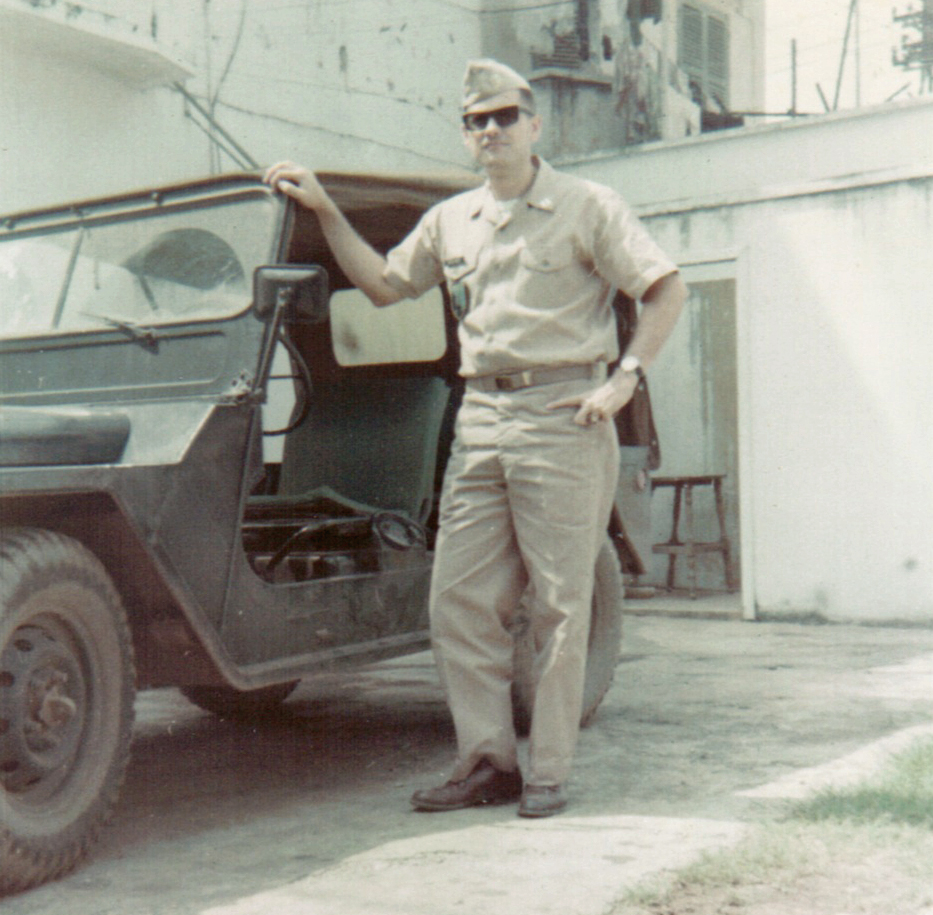 With SOG's move across town, I had to bid an emotional farewell to my 9th floor luxury accommodations with the intermittent electricity and water, and relocate to a 3-story structure within walking distance of the new SOG compound. Life definitely got better with this move. Whereas I had long ago accepted that the day would start and end with a 9-story hike up/down the narrow stairway of my quarters (I quit using the elevator even when it worked, knowing that fate would eventually place me between floors during a power outage), I could now slog my way up one flight of stairs and be "home."
The change in neighborhood was not entirely without its drawbacks. Proximity to the Palace and the American Embassy, both of particular interest to VC gunners, made life a little more exciting than living in the urbs. A favorite enemy pastime was to lob Soviet-made 122mm rockets in the direction of these high-value targets. The "rocket belt" around Saigon described an area located at a distance from the Palace matching the nominal range of the 122mm rocket. After dark, VC gunners would creep into the "belt", quickly set up and fire, and be gone before allied forces could respond.
This hurry-up launch procedure resulted in zero hits on the Palace or Embassy, but lots of anxiety for the neighbors. The Indian Consulate, next to my quarters, received a direct hit one night; and a number of times rockets hit close enough to take out windows and splatter our building with shrapnel. The first time it happened, I rolled out of bed and groveled around on the floor in the dark looking for a hiding place; but over time I realized that they fired only one rocket at a time, so whether it landed on me or not, there was no point in looking for cover. It was times like that when I sort of longed for the tranquility of Cho Lon. The night of January 31, 1968, and in the days immediately following, however, Cho Lon was not a good place to be.
Historians have described the Tet Offensive as the turning point of the Vietnam War. In spite of overwhelming losses, North Vietnam, with the aid of skewed media reporting, convinced the U.S. public that the U.S. was losing the war. For me, the Tet Offensive began in the wee hours of the Tet New Year (1 Feb.) with the sound of nearby small-arms fire. After the first bursts, the firing continued off and on well into the new day. A sign was posted on the gate of our quarters to stay off the streets. I decided to try to make my way to the SOG compound, where I might be of some use. When I stepped out through the gate, it was positively eerie: the normally busy street was completely deserted, and in the background, bursts of gunfire could be heard in every direction.
As I carefully made my way along the street, Swedish K at the ready, a jeep roared up, and two MPs asked me where I was headed. They then suggested it would be safer to ride with them. Our route took us past the side gate of the Palace, where several bodies in civilian clothes lay sprawled in the street. The MPs pointed out the armbands which identified them as VC (worn so they wouldn't shoot each other). These particular troops had been hiding in a building under construction across from the gate -- a building they had slipped into the day before and past which I obliviously strolled the previous evening.
 As we pulled up to the SOG compound, a jeep full of American civilians screeched to a halt in front of us. They were from the American Embassy and were looking for ammunition. The VC had breached the Embassy wall and was on the grounds of the compound. The sounds of a pitched battle could be heard from that direction. Eventually, Marine security guards would kill all the attackers before they could enter the building.
As the day wore on, the extent of the offensive became clear. VC and NVA regulars had attacked almost every major city and allied military installation in South Vietnam. As darkness fell on that first day, the enemy troops around and in Saigon began to make their way through the city streets, taking cover in areas where it was almost impossible to bring fire to bear without endangering the civilian population. As darkness fell on Saigon on the night of February 1, 1968, allied forces were confronted with a very difficult situation -- how to dislodge the enemy from the city while avoiding civilian casualties. After the previous night's surprise offensive, VC and NVA regulars had hunkered down in various parts of the city, waiting for the cover of darkness to press their attacks. Despite heavy losses, units continued to infiltrate the city from staging areas in the countryside.
At the SOG compound, we received a steady stream of reports of enemy movements along the city streets and through the outlying areas of downtown Saigon. The ubiquitous parachute flares were only a slight comfort. An alert of imminent attack on the SOG compound came from a helicopter hovering in the vicinity -- a squad-sized VC unit had been spotted making its way in our direction.
My office space was on the ground level in the old MACV I communications center, somewhat isolated from the SOG main building because of the highly classified material and crypto devices required for special communications I operated in support of SOG operations. One of my highest priorities was to ensure that none of this material fell into enemy hands, even if I had to destroy it. Armed with two thermite grenades and my trusty Swedish-K 9mm submachine gun, I took up a position in the office doorway, prepared to toss the grenades into the classified equipment and document area if the SOG compound were breached. I recall thinking how vulnerable I felt facing the paved courtyard of the MACV I compound -- a mortar or grenade on that surface would spray lethal shrapnel in all directions.
Location reports on the advancing squad of VC stopped coming over the radio, and we began to wonder if it was a false alarm. Suddenly, the distinctive "whump" of an outgoing small-caliber mortar round made us aware that the phantom VC squad had set up a mortar position across Rue Pasteur in the backyard of a civilian home directly across from our front gate.
Fortunately for us, the mo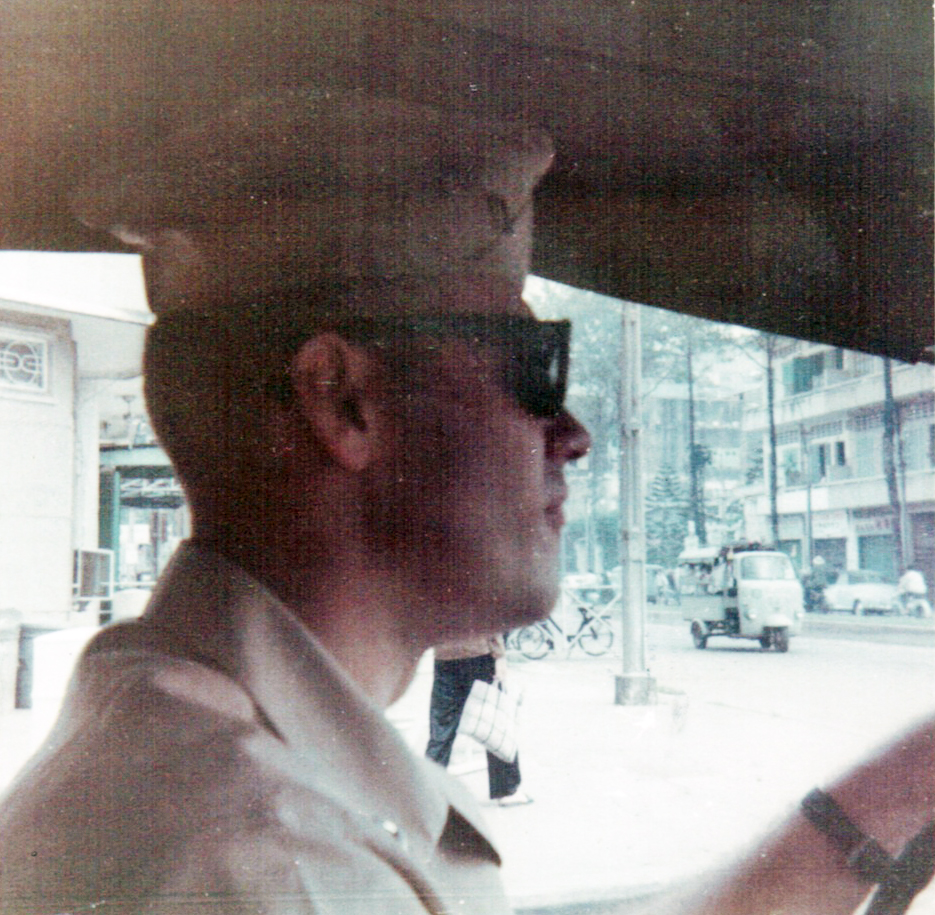 rtars were being fired parallel to Pasteur toward the river, directed at the Rex and Brinks hotels where senior U.S. and allied officers were billeted. One of the SOG troops made his way to the top of our building to get a better angle on the mortar crew and began firing tracers to mark their position for a gunship strike. Once their position was compromised, the squad faded into the night. Over the next several days, pockets of resistance were isolated and destroyed. I recall the surreal situation of barbequeing steaks on the roof of the Rex Hotel while watching the daylight airstrikes on VC positions out by the racetrack and around Cho Lon.
I had heard that Cho Lon took a pretty bad beating during the offensive, so one day, after things had returned to their pre-Tet normality, I drove back to the old "hood." What a disaster area! Block after block had been turned into rubble. It looked like a scene out of WWII or the Watts riots -- a few building facades remained standing, but mostly there were piles of debris. This was the last area cleared of the enemy, at great cost to the businesses and homes of the civilian population. The thriving pre-Tet Chinese community had virtually disappeared.
The Tet Offensive marked the midpoint i n my one-year tour of duty. The remainder of the tour was, frankly, unremarkable. Somewhere about mid-tour, an almost imperceptible attitude adjustment took place in many who served in Vietnam, probably related to a growing realization that perhaps you really were going to make it through. The change was manifested in a greater sensitivity to potential risk and inversely related to the number of days remaining before the tour rotation date. I never met anyone in Vietnam who didn't know exactly how many days he had remaining in country ("x" days and a wakeup).
It helped to be associated with such an effective and professional organization such as SOG. That professionalism was due in large part to the Chief of the organization, COL Jack Singlaub, whose WWII service with the OSS and unconventional warfare knowledge made him particularly well suited to lead this elite group of volunteers.